Instead of thanking my husband for fifty “wonderful” years, I walked up to the microphone and told the truth. Neither he nor the guests were ready for what came next…
Our fiftieth wedding anniversary was supposed to be the kind of celebration people talked about for years.
The community hall in our little Iowa town was packed. Neighbors had brought casseroles, pies, deviled eggs, and folding chairs from home because there weren’t enough seats. A gold banner hung crookedly above the stage:
HAPPY 50TH ANNIVERSARY, RAYMOND & MARGARET!
People kept calling us an inspiration.
That almost made me laugh.
Nobody knew that our happiest marriage existed mostly in other people’s eyes.
Raymond had always been good at looking like the kind of husband women wished they had. At seventy-two, he still stood straight, kept his silver beard neatly trimmed, and never left the house without a pressed shirt.
I know because I pressed every one of those shirts.
For decades.
While he drank coffee at the kitchen table, I ironed collars and cuffs before sunrise, then pulled on my rubber boots and went to work at the dairy farm outside town.
By six in the morning my hands were already cold and aching.
By noon, when I came home, there was still lunch to cook, laundry to wash, chickens to feed, vegetables to weed, jars to can, floors to scrub.
Raymond worked as a maintenance mechanic for the county co-op.
At least that was what people called him.
In his younger years he did work hard. But over time, especially after he moved into the office, the stories of the work he had done became much bigger than the work itself.
“Ray can fix anything,” people said.
“Built half that house himself.”
“Planted that whole orchard with his own two hands.”
Raymond never corrected them.
Why would he?
The truth made him smaller.
The stories made him a legend.
A week before our anniversary, our friend Linda brought a newlywed couple to visit us. She wanted them, as she put it, “to see what real commitment looks like.”
Raymond loved that.
He sat at the table with one arm thrown across the back of his chair while I served coffee and homemade apple butter.
Then he pointed through the window.
“See those trees? I planted every one.”
The young husband nodded admiringly.
His wife smiled.
I stared through the same window.
I remembered those trees as thin saplings.
I remembered hauling compost in a rusted wheelbarrow.
I remembered digging holes until blisters opened on both palms because Raymond had gone fishing with his brother for three days.
He continued.
“House needed a new roof in ’94. Did most of that myself too.”
That roof had been done by two cousins and a neighbor while Raymond lay on the couch claiming his back had “gone out.”
Every time heavy work appeared, so did Raymond’s back pain.
Then, miraculously, it disappeared before poker night.
I looked at my hands.
The knuckles were swollen now.
The skin around my thumbs had thickened years ago.
My nails never stayed pretty for more than a day.
The young woman suddenly asked, “Margaret, what part did you do?”
Raymond laughed before I could answer.
“Oh, Maggie handled the home things. Best pie maker in three counties.”
Something inside me tightened.
“The orchard,” I said quietly. “I planted the orchard.”
Silence.
Raymond blinked.
Then he smiled.
“Well, we both worked on it.”
“No,” I said. “You were at your brother’s.”
The young man’s eyes dropped to Raymond’s smooth hands, then to mine.
Raymond changed the subject.
After they left, he accused me of embarrassing him.
“For what? Telling the truth?”
“You didn’t need to make me look foolish.”
I nearly answered, Then stop making me disappear.
But fifty years of silence is hard to break in one afternoon.
So I washed the cups.
A few days later, Linda organized a planning meeting for our anniversary party.
Raymond arrived even though no one had asked him to.
Within ten minutes he was entertaining the women.
“I rescued Maggie from a hard life,” he announced. “Her family didn’t have much. I told myself, that girl deserves somebody to take care of her.”
Women sighed.
One said, “They don’t make men like that anymore.”
I thought, Thank God.
My mother had been poor, yes.
But she was proud.
Clean curtains.
Food on the table.
Children sent to school in washed clothes.
Raymond had not rescued me.
If anything, I had spent fifty years making his life comfortable enough for him to believe he had rescued me.
Then he told a story about taking me for a motorcycle ride when we were courting.
Except he hadn’t taken me.
He had taken another girl.
I had walked three miles home that night.
Still, everybody laughed at his romantic memory.
Finally I stood and began gathering plates.
Raymond pushed his toward me without looking.
I stopped.
Then I put it back in front of him.
“Take your own plate to the kitchen.”
His smile froze.
“Maggie…”
“I’m not your waitress.”
Nobody moved.
Nobody laughed.
For the first time in our marriage, Raymond looked at me as if he had discovered I had a voice.
Later Linda pulled me aside.
“On Saturday,” she whispered, “we’d love you to say a few words about Raymond. Something heartfelt. Thank him for being your rock.”
My rock.
I almost laughed.
Instead, I nodded.
For three nights, I couldn’t sleep.
Saturday arrived.
The hall filled early. Someone from the county office brought us a framed certificate honoring “fifty years of love, loyalty, and family.”
Raymond held it over his head like a trophy.
Then he took the microphone.
Of course he did.
He spoke about devotion.
Sacrifice.
How he had protected me all my life.
People clapped.
He told them he once carried me through mud so I wouldn’t ruin my shoes.
That had never happened.
He said he sat beside my bed for nights when I had pneumonia.
He had gone deer hunting that week.
And then he said the one thing I could not forgive.
“When Maggie’s mother died,” Raymond told the room, lowering his voice dramatically, “I never left her side. Stayed awake with her all night. Held her together when she fell apart.”
My fingers went numb.
When my mother died, Raymond had been visiting his brother in Nebraska.
I had called him crying.
He had said, “Hang in there. I’ll be back Sunday.”
My neighbor Ruth sat with me beside my mother’s empty bed.
Ruth made the coffee.
Ruth helped me choose the dress for the funeral.
Raymond arrived after the casseroles had already been delivered.
And now he was stealing even that grief.
People were wiping their eyes.
Then Linda smiled and announced:
“And now, Margaret would like to say a few words about her husband.”
The room erupted in applause.
Raymond handed me the microphone and whispered with a grin:
“Go on, Maggie. Tell them how lucky you’ve been.”
I looked at him.
Then at the rows of faces waiting for the beautiful ending to a beautiful marriage.
And for the first time in fifty years, I understood that if I stayed silent now, I would be helping him bury my life while I was still alive.
I held the microphone with both hands because one hand alone was shaking.
“I was asked to thank Raymond for fifty wonderful years,” I began.
Everyone smiled.
Raymond leaned back proudly.
“So I’ve been trying to think what exactly I should thank him for.”
A few people chuckled.
I didn’t.
“I suppose I could thank him for giving me plenty of practice ironing shirts.”
The chuckling stopped.
“Or for teaching me that apparently a garden weeds itself, roofs repair themselves, canned vegetables crawl into jars by themselves, and children somehow grow up while their father tells stories about how hard he works.”
Raymond’s face changed.
“Maggie,” he muttered.
I looked at him.
“No. You had your turn.”
The entire hall went still.
I told them about the orchard.
About hauling compost alone.
About the roof.
About working at the dairy before sunrise and then coming home to another full day.
I told them that Raymond had worked too, especially when we were young. I didn’t erase what he had truly done.
“I’m not here to turn him into a villain,” I said. “I’m here because he spent years turning himself into a hero by removing me from the story.”
Someone near the back whispered, “Lord…”
Raymond stood.
“That’s enough.”
“No,” I said.
My voice surprised me.
It wasn’t loud.
It was steady.
“You said you were beside me when Mama died.”
His face went pale.
“You weren’t.”
I could hear someone crying.
“You told me over the phone to hold on until Sunday. Ruth Jenkins sat with me that night.”
Every face turned toward Ruth.
She slowly nodded.
“I was there,” she said.
Raymond looked around as if someone might rescue him.
Nobody did.
“You arrived after the funeral food was already on the table,” I continued. “And tonight you stood here and took credit even for holding me while I grieved.”
His mouth opened.
No words came.
I looked at the certificate on the table.
Fifty Years of Love and Loyalty.
“I did love you, Raymond.”
That sentence nearly broke me.
“I loved you when we were young. I loved you when we had nothing. I loved you when our first baby had a fever and we took turns watching him breathe.”
Raymond’s eyes dropped.
“But somewhere along the way, you started loving the story of yourself more than the woman beside you.”
Nobody moved.
“And I helped you.”
He looked up.
“I kept quiet because I thought that was what a good wife did. I protected your pride. I laughed at stories that weren’t true. I cleaned up after you, worked beside you, worked behind you, and let people praise you for things my hands had done.”
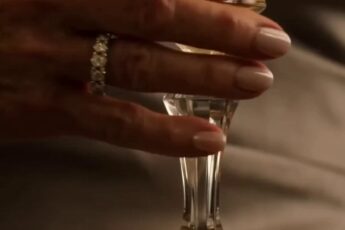
I raised my hands.
Old hands.
Crooked fingers.
Marks from work that no expensive cream could hide.
“These are my fifty years.”
The hall was silent for several seconds.
Then one person began clapping.
Ruth.
Another woman joined her.
Then the young couple who had visited us stood up.
Soon almost everyone was on their feet.
I didn’t feel victorious.
I felt exhausted.
Like I had finally put down something I had carried so long I had forgotten its weight.
Raymond left before the cake was cut.
That night, I found him sitting at the kitchen table in the dark.
“You humiliated me,” he said.
I took off my shoes.
“No, Raymond. I stopped protecting you from the truth.”
“After fifty years?”
“Especially after fifty years.”
He stared at the table.
“What happens now?”
That was the strange part.
I didn’t want revenge.
I didn’t want to throw him out.
I wanted something much harder.
“I don’t know,” I said. “But tomorrow morning, you’re making your own breakfast.”
He actually looked offended.
I laughed.
The sound surprised both of us.
The next morning, I woke at six.
No ironing.
No breakfast tray.
No coffee already poured for him.
I sat on the porch wrapped in an old cardigan and watched sunlight spread over the orchard I had planted.
A few minutes later, the kitchen door opened.
Raymond stepped outside carrying two mugs.
He placed one beside me.
“Coffee.”
I tasted it.
Too strong.
No sugar.
Terrible.
“Needs work,” I said.
He nodded.
“I figured.”
Then he sat beside me.
We didn’t suddenly become newlyweds again.
Real life doesn’t change that neatly.
For weeks, he sulked.
Then slowly, awkwardly, he began doing things he had always assumed would somehow get done.
He washed dishes.
Badly.
He ruined one of his white shirts.
He burned a pot of oatmeal.
And one afternoon I saw him outside beside the oldest apple tree, tying up a broken branch.
When our neighbor stopped by, Raymond pointed toward the orchard.
For one second I expected the old story.
Instead he said:
“Margaret planted these.”
He glanced toward the porch.
“Every single one.”
That sentence gave me more peace than the anniversary certificate ever could.
We are still married.
Not because fifty years automatically makes a marriage sacred.
Not because women are supposed to endure everything quietly.
We are still married because after fifty years of telling everyone what kind of husband he was, Raymond finally began trying to become one.
And I finally learned something too.
Love is not disappearing so someone else can shine.
Love is not swallowing the truth to protect another person’s pride.
And loyalty does not require silence.
Sometimes the bravest thing a woman can do after a lifetime beside someone is not to walk away.
Sometimes it is simply to step forward, take the microphone, and say:
“I was here too.”