On the third Saturday in June, at 6:47 a.m., my mother-in-law, Patricia, rapped her knuckles against the guest room window like she was summoning room service. I was lying flat on a futon that smelled faintly of mothballs and lake mildew, pretending the sound was a woodpecker.
It was my day off. My first Saturday without a work email in six weeks. I’d planned to take the kids out on the pontoon, maybe finish the Grisham paperback I’d been carrying around since March, and grill brats on the deck.
The window rattled again.
“Dean! Sun’s up! The stain won’t spread itself.” Patricia’s voice could cut through double-pane glass like a table saw.
I rolled over and stared at the ceiling. Melissa, my wife, was already up—I could hear her in the kitchen, laughing with her mom over coffee, the two of them thick as thieves. The kids, Avery and Leo, were still zipped into their sleeping bags on the floor, dead to the world.
We’d driven up to Patricia’s lake house in northern Michigan the night before. Two hundred and forty miles in a minivan with a broken AC, because Melissa’s mother had called Tuesday and said, “The east side of the cabin needs to be power-washed and restained before the family reunion in July, and your husband is young and able-bodied.” Not *you and Dean*, just *your husband*. I was forty-four, had a pinched nerve in my lower back from sitting at a corporate audit desk all week, and hadn’t held a paint scraper since college.
But Melissa had looked at me with those big green eyes and said, “Mom’s getting older, Dean. Her knees are shot. It’s just one weekend.”
One weekend. Every May it was roto-tilling the garden. Every October it was splitting firewood. Every visit, I became the hired hand, while Patricia followed me around in a straw hat, sipping iced tea, critiquing my technique.
I pulled on a pair of cargo shorts and a ratty Michigan State tee. The air outside was already sticky. Through the window, I could see Patricia standing on the lawn, holding a brand-new sanding block like a relay baton.
By 7:15, I was on my knees on the eastern deck, scraping old gray stain off cedar planks while the lake shimmered fifty yards away like a taunt. Patricia had set up a director’s chair under the big maple and was reading a Nora Roberts novel, occasionally glancing up to offer notes.
“You’re missing the groove by the rail, Dean. Water pools there. You have to dig the scraper in and twist.”
I bit down on my tongue and twisted. A blister opened on my thumb. The kids wandered out around eight, still in pajamas, and Patricia shooed them back inside. “Grandma’s got cinnamon rolls on the counter. Daddy’s busy.”
I caught Melissa’s eye through the screen door. She gave me a small, apologetic smile and mouthed *thank you*. I did not smile back.
By noon, the sun was directly overhead, baking the deck until the old varnish bubbled. I’d stripped maybe a quarter of the boards, and my palms were raw. Patricia had gone inside to make lunch, and I could hear her through the open kitchen window, talking to Melissa in a voice that was never quite low enough.
“He’s so slow, Mel. Your brother Tony would’ve had this done by now. I don’t know how you get anything fixed at home.”
“Mom, he’s an accountant. He doesn’t do this every day.”
“That’s what I mean. Boys these days. No practical skills. You should’ve married that contractor from Traverse City.”
I set the scraper down. My hand reached for the sander, but I just stared at the plug. My wife’s mother had just told her she should have married someone else. And Melissa had laughed—a nervous little laugh, but a laugh all the same.
I just… I don’t know. I stood there, sander in my hand, not moving. The sander was heavy, and my thumb was bleeding through the band-aid, a little red bloom on the cloth. I could feel my heartbeat in the blister. I looked down at the deck, at all the gray I still had to strip, and I thought of the rest of the weekend, the rest of the summer, the rest of my life. My jaw was clenched so tight it ached.
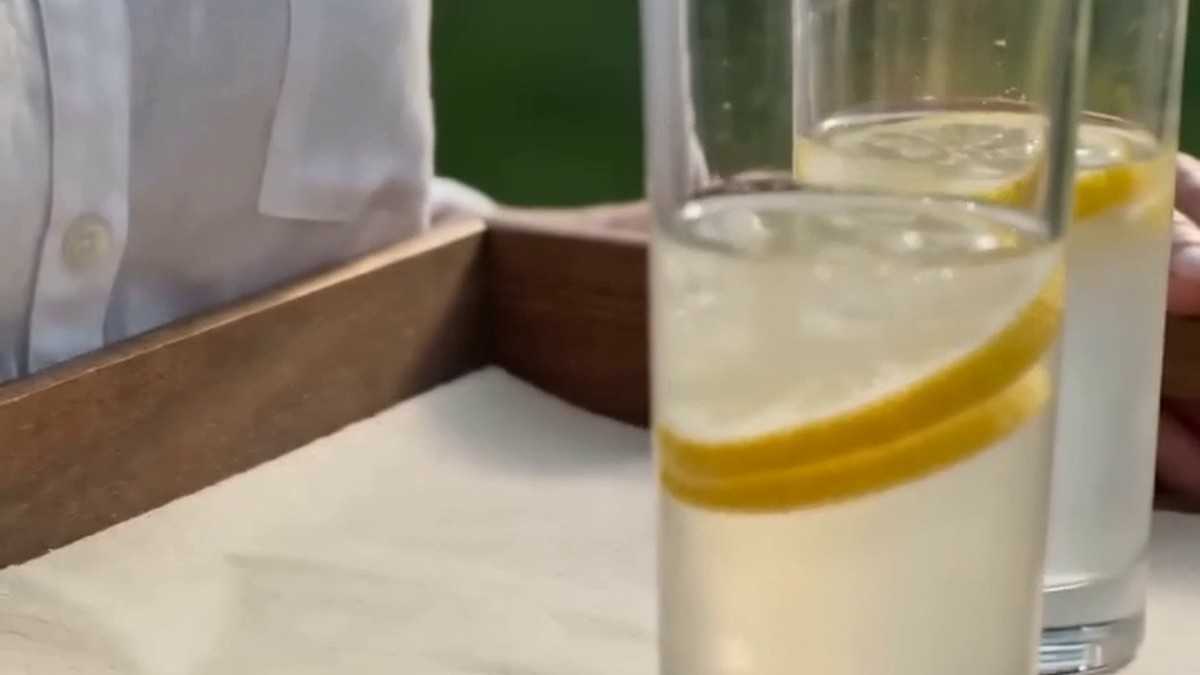
When Patricia came out at 1:30 with a tray of lemonade—fresh linen blouse, white capris, like a garden party—I was still just standing there. She didn’t seem to notice.
“You’re leaning too hard on the sander, Dean. You’re going to gouge the wood. Light touch. Like a dance.” She mimed a graceful motion with her free hand.
I looked at her. Then I put the sander down. Not hard, just deliberate, placing it on the drop cloth. I wiped my face with the bandana, saw the rusty smear my thumb left on the fabric. My voice came out rougher than I intended.
“I’m not dancing, Patricia. I’m sanding. At 90 degrees, on my knees, and I—I don’t even know what I’m doing, so maybe just… maybe just let me do it wrong my own way, okay?”
She blinked, the lemonade tray tilting a fraction. “There’s no need for tone. I’m only trying to help. Melissa said you wanted to learn.”
“No. Melissa said you needed help. That’s different. That’s—she didn’t ask me. She just… I’m here because she said yes for me.” My voice cracked on *yes*.
Patricia set the tray down with a little clink. “Well. Help is help. And you’re not exactly an expert.”
I didn’t answer. My hands were shaking—from the heat, the work, something else. I bent down, picked the sander back up, and turned it on. The vibration masked the silence. But I didn’t finish the east deck until 5 p.m., when the light got long and golden and the mosquitos started biting. I didn’t stop for lunch. I didn’t come in for a break. I sanded every board, scraped every rail, and then I stood up, my back screaming, and looked at Patricia.
“It’s ready for stain.”
She inspected it walking the length of the deck, running her finger along the grain. “Hmm. You missed a spot by the corner post. But it’ll do.”
It’ll do.
I walked into the cabin, took a cold shower that never got cold because the water pressure was a joke, and packed our duffel bags. Melissa found me zipping the last one.
“Dean? What are you doing?”
“Going home.”
“What? No. We’re staying through Sunday. Mom’s making pot roast.”
“I’m not—” I stopped, took a breath. “I’m not hungry. I can’t. I can’t stay.”
She crossed her arms, the same way Patricia did. “Is this about the deck? Because you’ve been in a mood all day and Mom was just trying to get it done. You could’ve said no.”
I zipped the bag, squared it on the bed. “When, Melissa?” My voice was quieter than I wanted. “When could I have said no? When you volunteered me on Tuesday without… without even looking at me? When she woke me up at dawn? Or when she told you to your face that you should’ve married someone else?”
Her expression flickered—surprise, then defense. “She didn’t mean it like that.”
“She said it exactly like that. And you laughed.”
Melissa’s mouth opened, then shut. Outside, Patricia’s voice rang out: “Mel? Where’s Dean? The stain needs to go on before the dew hits.”
I grabbed the bags and walked out of the bedroom. The kids were in the living room, watching a Disney movie on Patricia’s ancient box TV. “Shoes on, guys. We’re heading home.”
“Now?” Avery looked up, her face falling. “But Grandma said s’mores.”
“We’ll do s’mores at home. In the backyard. I promise.”
I loaded them into the minivan without another word. Melissa stood on the porch, arms wrapped around herself, while Patricia gaped from the doorway like I’d just set the shed on fire.
“You’re really leaving?” Melissa called. “Over a deck? Over words?”
I buckled Avery’s seatbelt and shut the sliding door. I leaned against the van for a second, trying to find the right thing to say, but all that came out was: “I’m leaving because I can’t—I’m not the handyman. I’m not a joke for your mom to tell. I’m just…” I rubbed the back of my neck. “I’m tired, Mel. The kind of tired that doesn’t quit.”
“So we’re not a team? Is that what you’re saying?” She was almost shouting.
I climbed into the driver’s seat and cranked the engine. The AC finally kicked on, a blessed cold rush. I rolled the window down and looked at her. “A team doesn’t send one person out to get picked apart while the other sits back and… I don’t know, sends encouragement. I need you to be on my side, not hers. Not on this.”
Melissa’s face was a mess of anger and something else, something that looked like fear. I pulled out of the gravel driveway and onto the two-lane road that wound through the birch trees. In the rearview mirror, the cabin got smaller and smaller until it was just a green smudge against the blue-gray water.
The drive home took four hours. I stopped once at a gas station in Clare to buy the kids chicken nuggets and a promise of a blanket fort that night. They were quiet, sensing the shape of a thing they didn’t have words for yet. I felt like a jerk, but also lighter than I had in years.
Melissa didn’t come home that night. She texted at 10 p.m.: *“Staying here. We need to talk tomorrow.”* I didn’t answer. I built the fort out of couch cushions and the old quilt with the dolphins, read the kids two chapters of *The Mouse and the Motorcycle*, and slept on the couch with the front door unlocked.
She walked in at 11 a.m. Sunday morning, carrying a grocery bag and a look I’d never seen on her face before—something between furious and scared. I was at the kitchen table, doing the crossword.
She set the bag down. “Mom’s furious. She said you embarrassed her in front of the Johnsons next door. She said you owe her an apology.”
I didn’t look up. “Is that what you think?”
A pause. Then, quietly: “No.”
I put the pencil down. “Then why are you here alone, Melissa? Why didn’t you come home last night?”
Her chin trembled. “Because I didn’t know what to say to you. Because I’ve been making excuses for her my whole life, and you’re the first person who ever just… walked away. It scared me.”
I stood up and leaned against the counter. “I love you. But I will not—I can’t—be the guy she uses to prove men aren’t good enough. Next deck, I’ll call a contractor and pay for it myself. The criticism, the jokes, the you-should-have-married-that-guy—that stops, or I stop.”
Melissa rubbed her eyes with the heels of her hands. She looked exhausted. “I’ll talk to her.”
“You’ve said that before.”
“This time I mean it. I’ll tell her if she says one more word about you that isn’t kind, we’re skipping the reunion. All of us. No separate vacations.”
I studied her. She wasn’t crying; she was steady. For the first time, she looked less like Patricia’s daughter and more like my wife.
“Okay,” I said. “But the next time we go to the lake, I’m sitting in a chair with a fishing pole. And if your mother hands me a power tool, I’m handing it right back.”
A small, wet laugh. “Deal.”
Two weeks later, we drove up again, just for a day, to test the water. The reunion wasn’t until July, but Melissa wanted to practice the new rules. Patricia met us on the porch with a pitcher of iced tea and a pointed glance at the deck, which now gleamed under a fresh coat of stain—Tony had driven over from Grand Rapids to finish the job, she informed us, still two days of work.
I didn’t touch a single brush. I took Avery and Leo down to the dock around six in the evening, and we dragged the old orange kayaks—Perception Swifty 9.5s, the paint scratched to hell—into the shallows. The sun was dipping toward the tree line, turning the water to wrinkled copper. I helped Avery into her life jacket, then held the kayak steady while she wobbled in.
We paddled out maybe fifty yards, far enough that the dock became a toy. Avery pointed with her paddle. “Look, Daddy. The deck is shiny. Did Uncle Tony do that?”
I followed her gaze. The fresh stain caught the low light, a deep amber almost gold, and from here looked flawless. My thumb, still pink with new skin, curled on the paddle shaft.
“Yeah, sweetheart. That was Uncle Tony.”
Avery thought about this for a moment, her paddle trailing a little whirlpool. “It’s pretty.”
“It is.”
I let the kayak drift, the water lapping the hull. Leo was on the shore, helping Melissa pick smooth stones. The deck gleamed, untouched by my hands, and I didn’t need to name what I felt—not relief, not victory, just a quiet loosening in my chest, like a knot that had been pulled for years finally fraying. We stayed on the water until the mosquitoes found us, then paddled back in the blue twilight.