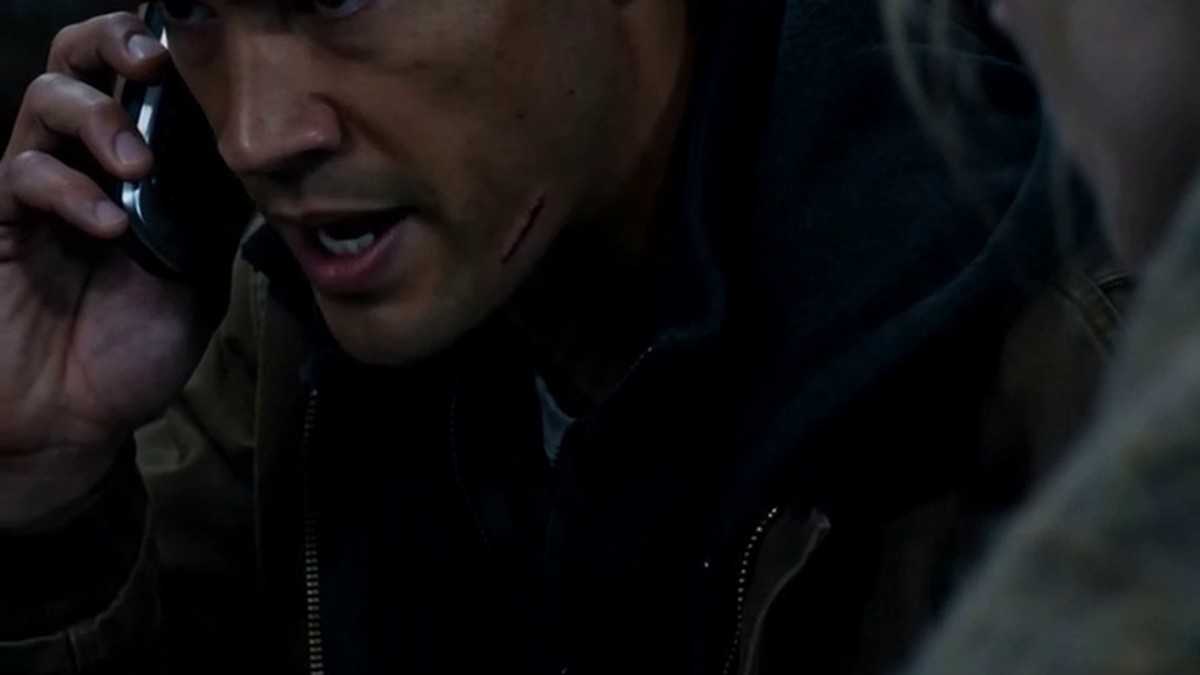
Ben Cutter owned the biggest auto repair shop in Dry Creek, and everyone in that dusty Nebraska town knew his name for the wrong reasons. He was a thick-necked man with a bulbous nose and a permanent squint, the kind of guy who never met a problem he couldn't solve by shouting at it. His wife, Millie, was twenty-four — nearly ten years younger — with wispy blonde hair she kept in a loose braid and a way of moving through a room like she was apologizing for taking up space.
The town had talked plenty when Ben brought her home two years ago. What's a soft-spoken girl like that doing with an old mule like Ben Cutter? The answer was simple, and sad. Millie's dad had died owing money to half the county, and her mother, a worn-down woman working double shifts at the dollar store, had looked at Ben's proposal the way you'd look at a life raft. "Honey, he's got a business. A roof. He's solid," she'd said, squeezing Millie's hands. "You won't have to struggle like I did."
So Millie had nodded, put on the white dress, and moved into the house beside the garage.
For a while, it was okay. Ben wasn't tender, but he wasn't cruel either. The shop did steady business — oil changes, transmission work, the occasional full rebuild. He kept five mechanics on payroll, guys who'd been with him for years. Pete, the oldest, had knuckles like walnuts and a limp from a motorcycle accident in '92. Then there was Jesse — quiet, broad-shouldered, with dark hair that fell across his forehead and hands that could coax an engine back to life just by listening to it.
Then the drinking got worse.
It started after Ben lost a big fleet contract with a trucking company out of Omaha. He'd underbid the job, bought parts he couldn't return, and ended up in the hole for almost eight grand. The bank called. Then called again. Ben started keeping a bottle of Wild Turkey in the bottom drawer of his office filing cabinet. By November, he was cracking it open before lunch.
"Ben, the guys are asking about their paychecks," Millie said one night, stirring a pot of chili that had long since gone cold. "That's two months now."
He didn't even look up from his glass. "They'll get paid when I get paid."
"They've got families. Pete's wife needs medication—"
The glass hit the wall two inches from her head. Bourbon dripped down the faded floral wallpaper. "You want to run my business now? You? I dragged you out of that trailer park, put shoes on your feet, and this is the thanks I get?"
Millie didn't flinch. She'd learned not to. She just waited until he passed out in his recliner, then went out to the garage and swept the floor because no one else had done it, and the mess would only make him angrier in the morning.
The mechanics were getting restless. She could hear them at night, their voices carrying from the bunkhouse Ben had built behind the shop. Jesse's voice was the calmest, always the one saying "let's give it another week." But even his patience was running thin.
"She shouldn't be covering for him," Jesse muttered to Pete one evening, watching Millie carry a crate of oil filters through the rain because Ben had fired the parts runner. "Look at her. She's a ghost in her own life."
Pete spat tobacco into an old Coke can. "Not your business, son."
"Maybe it is," Jesse said quietly.
That same week, the county assessor's office sent a registered letter. Ben had been operating for years on a handshake deal with a former zoning official who'd since been indicted. The garage sat on a parcel technically zoned agricultural, and someone in Lincoln had finally noticed. Back taxes were owed. Penalties had accrued. The number on the letter was north of thirty thousand dollars.
Ben threw the letter in the trash and poured another drink. "Let 'em come," he slurred. "This is America. A man's business is his castle."
Millie retrieved the letter from the trash after he stumbled to bed. She read it three times by the dim light above the kitchen sink. Her hands were trembling, but not from fear — not exactly. It was something closer to recognition. The house of cards was wobbling, and she was standing underneath it.
On the third of December, the first snow came. Big, wet flakes that turned the gravel lot to slush. Ben had driven to Grand Island to beg a supplier for more credit, leaving Millie alone with the mechanics. She was in the back office, sorting invoices, when Jesse appeared in the doorway.
"Can I talk to you?" he asked.
She nodded without looking up.
"Ben's not gonna fix this," he said. "The guys are talking about walking. All of us, at once. There's a shop in Hastings hiring. Good pay, benefits."
"Then you should go," Millie said. "All of you. You don't owe him anything."
"I know," Jesse said. He took a step closer. "But I keep thinking about what happens to you when we leave."
She looked up then. His eyes were brown, with little flecks of gold near the pupil. He had a crescent-shaped scar on his jaw from a fan blade that had come loose when he was nineteen.
"I'll manage," she said.
"You shouldn't have to manage. You should have a life."
Millie opened her mouth to answer, but the words stuck in her throat. No one had talked to her like that in years. No one had looked at her like she was a person instead of a piece of office equipment.
That night, Ben came home from Grand Island empty-handed. The supplier had cut him off. He was pacing the kitchen, reeking of whiskey, when he saw the county letter — Millie had left it on the counter by mistake, or maybe not by mistake.
"Going through my things now?" he roared. "Snooping around like some kind of—"
He grabbed her arm. Hard. Hard enough that she felt something pop in her elbow. She didn't scream. She just pulled away, grabbed her coat, and walked out into the snow.
She made it as far as the old motor lodge on the edge of town before she realized she had nowhere to go. No money, no car, no friends she could call at eleven o'clock on a Wednesday. She was standing under the flickering neon VACANCY sign, snow melting in her hair, when headlights swept across the parking lot.
Jesse's old Chevy pickup.
He rolled down the window. "Get in."
"I can't—"
"Millie. Get in the truck."
She got in. He drove without speaking, past the grain elevator, past the boarded-up Dairy Queen, out onto the county roads where the snow was falling faster and the ditches were filling with white. Eventually he pulled up to a small cabin set back in a grove of cottonwoods. It was rough — plywood floor, a wood stove, a cot with a wool blanket — but it was warm.
"Used to be my uncle's hunting shack," Jesse said. "No one comes out here this time of year."
He lit the stove, found a can of beef stew in the cupboard, heated it on the hot plate. Millie sat on the cot, cradling her sore arm.
"Why are you doing this?" she asked.
Jesse leaned against the doorframe. "Because I heard him tonight. We all did. Pete wanted to call the sheriff, but I said no. I said I'd handle it."
"Handle it how?"
"I don't know yet," he admitted. "But I know one thing. You're not going back there."
He stayed that night, sleeping on the floor in his coat while she took the cot. In the morning, he brought her coffee from a thermos and a day-old cinnamon roll from the gas station. And then he did something that surprised her — he sat down on the edge of the cot and started talking.
About growing up on a ranch near Broken Bow. About his mother, dying of cancer when he was seventeen, leaving him with a stepfather who drank even more than Ben. About learning to fix engines because engines don't lie, don't hit, don't tell you you're worthless.
"I know what it's like," he said. "Waking up every day bracing for the next blow. Feeling trapped because there's no door that doesn't lead to something worse."
Millie looked at her hands. "My mom keeps saying he'll get better. That I just need to try harder."
"Your mom's wrong," Jesse said flatly. "And you know it."
She did know it. She'd known it for a long time, buried somewhere under the exhaustion and the shame. Hearing it out loud, in this dusty cabin with snow piling up against the windows, felt like oxygen.
Two days passed. Jesse brought supplies, kept the stove fed, slept on the floor. He didn't touch her, didn't pressure her, didn't do anything except be there. And on the third night, as the stove crackled and the wind howled through the cottonwoods, Millie said, "I know what you need to do."
"What's that?"
"Call him. Tell him if he wants me back, he pays you and the others what he owes. Every cent."
Jesse stared at her. "That's…"
"Ransom," she said, and almost smiled. "Sort of. But I'm not going back either way. He just doesn't need to know that yet."
The call was made from a payphone outside the bait shop in town. Ben's voice was a slurred mess of fury and panic. "You tell me where she is right now, you son of a—"
"You get the money," Jesse said calmly. "Thirty-four hundred for the guys, and another nine hundred for me. You've got forty-eight hours. Then we talk about where she is."
Ben cursed, threatened, begged. But the next morning, he drove to the bank, cashed in a CD his mother had left him, and came back with an envelope full of cash. He threw it at Pete's feet. "HAPPY NOW?" he screamed at the empty garage. "You're all fired! Every last one of you!"
The mechanics took their money and left. Pete lingered a moment, looking at Ben with something between pity and disgust. "Millie's better off," he said, and walked out.
That evening, a second envelope arrived at the shop — not from Jesse, but from Millie. Inside was a single sheet of paper, written in blue ink:
*Ben, I'm alive and I'm safe. The money was the right thing to do, and I'm glad you did it. But I'm not coming back. Not now, not ever. I should've left a long time ago. Don't look for me. It won't do any good.*
*— Millie*
Ben read it sitting in his empty garage, surrounded by oil stains and half-finished projects. He crumpled the letter, uncrumpled it, read it again. Then he put his head down on the workbench and stayed there for a long time.
A week later, a county sheriff's deputy served him with an eviction notice. The back taxes had caught up. The property was being seized. Ben Cutter had forty-eight hours to vacate. He packed a duffel bag and drove west, toward Colorado, and no one in Dry Creek ever heard from him again.
But that's his story. This is Millie's.
She stayed in the cabin through Christmas. Jesse found work at a garage in Hastings — the one that had been hiring — and came back every night with grease under his fingernails and a light in his eyes she'd never seen before.
On New Year's Eve, they sat on the cot together, watching snow fall through the window. A bottle of cheap champagne sat unopened on the floor. Neither of them felt like celebrating anything.
"Jesse," she said quietly.
"Yeah?"
"I'm scared."
He turned to look at her. "Of him? He's gone. Pete said he left town."
"No, not of him." She pulled the wool blanket tighter around her shoulders. "Of this. Of being happy. I don't think I remember how."
He was quiet for a moment. Then he reached over and took her hand. His palm was rough, calloused in all the places hard work leaves its mark. "Me neither," he said. "But I figure we can learn together."
On the first day of spring, they drove to Lincoln and stood in front of a justice of the peace. No white dress this time. No mother squeezing her hands and telling her it would all work out. Just Jesse in a clean shirt, and Millie with her hair down, and two strangers from the courthouse hallway serving as witnesses.
Afterward, they ate burgers at a diner off I-80 and talked about the future. Jesse had saved enough for a down payment on a small garage of his own. Millie was thinking about going back to school, maybe nursing. The road ahead was long, and they had no map, and that was terrifying. But it was also real, and it was theirs.
That night, back in the cabin — their cabin now — Millie stood by the window watching stars emerge over the cottonwoods. Jesse came up behind her and wrapped his arms around her waist.
"You okay?" he murmured.
She leaned back against his chest. "Yeah," she said. "I think I am."
Because here's what she'd finally figured out, after two years of walking on eggshells and making herself small: courage isn't the absence of fear. It's standing in the middle of it, feeling it shake your bones, and choosing anyway. Choosing yourself. Choosing the man who saw you when you'd forgotten how to see yourself.
And when she turned around and kissed him, with wood smoke in her hair and the last snow melting outside, she wasn't afraid anymore. She was home.