The first thing I saw after the emergency C‑section, still swimming in anesthetic fog, was a shock of wheat‑blond hair and eyes the color of a July sky. I smiled. My husband Jake went absolutely still. Like a door had slammed shut behind his face.
We live in a little split‑level in Beaverton. Jake’s a software lead—dark curly hair, olive skin, brown eyes so deep they’re almost black. I’m half Italian on my dad’s side, but I’ve got the same dark waves. Nobody on either side of the family tree comes out looking like a tiny Scandinavian cherub. I could see the math grinding behind his pupils before they even wheeled me into recovery.
The third day home, he stood in the nursery doorway and said it. “I need a paternity test, Emma. I won’t make it through the week without one.”
I was too wrecked to scream. My abdomen still felt like a zipper of fire. I just swayed with the baby, Oliver, and whispered to the soft spot on his head, “He’s ours. He’s ours.”
Jake packed a duffel bag that night and went to his parents’ house “for a while.” I stood at the kitchen sink and watched his taillights bleed into the rain. Then I went back to feeding, to stitches, to three‑a.m. terrors where I couldn’t tell if the wetness on my face was tears or leaking milk.
His mother, Linda, called the next afternoon. No hello. “If that test comes back negative, you’ll find out exactly what ‘destitute’ means. I will personally make sure you walk away with not a single fork from this marriage.”
She said it the way someone tells you the weather forecast. I hung up and bit down on a dish towel so I wouldn’t wake the baby.
The three‑week wait was a kind of suspended animation. Jake would show up every few days with a case of formula from Costco, a sleeve of diapers, sometimes a bag of cold brew cans. He’d set them on the dining table, look at Oliver for nine seconds, then leave. Never “how are you,” never “I’m sorry.” I started measuring my week by the sound of his footsteps retreating down the driveway. I hated that I still listened for him to turn around.
Yesterday, the envelope arrived. Medical‑looking manila, logo from a lab in Hillsboro. Jake’s hands shook when he tore it open. Mine were shaking too, which was unfair—I knew exactly what that baby was.
He scanned the page, and his whole body locked. Then he looked at me, and I swear his irises doubled in size. He started reading out loud, and his voice kept breaking: “Probability of paternity 99.999%… OCA carrier status detected.”
I said, “What?”
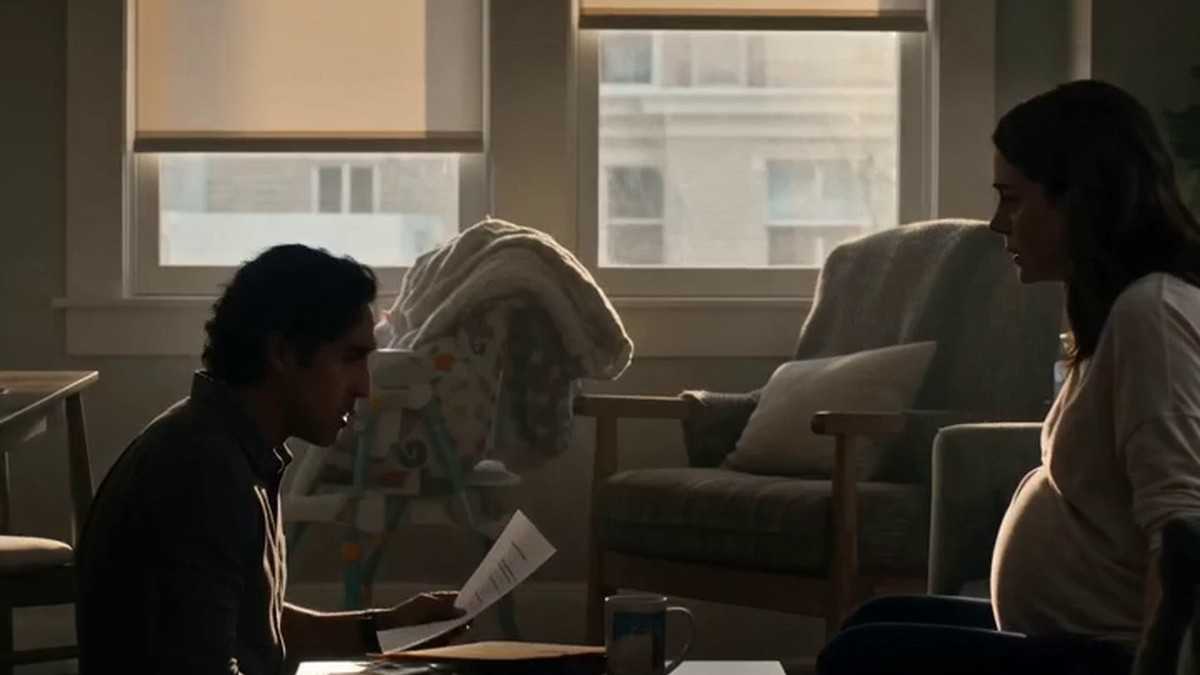
He sank onto the dining chair like his skeleton had been removed. Opened the second page—a geneticist’s note. He read it twice, then just handed it to me.
Turns out Jake carries a rare recessive variant of the OCA2 gene. So do I. When two carriers get together, the baby can pop out startlingly light, blue‑eyed, even if both parents look like they just walked out of a Sicilian wedding. It’s not betrayal. It’s just seventh‑grade biology with a twist nobody bothered to check for.
Jake raised his head, and I saw something on his face that wasn’t anger or suspicion. It was shame—the kind that makes you want to crawl under the floorboards. He whispered, “Forgive me. Oh God, forgive me. I was such an idiot. I was scared, and my mom…” He stopped.
I didn’t say anything. Everything I had wanted to scream for twenty‑one days had dried up into a single hard lump in my throat. Oliver slept in his bassinet, one tiny fist punching at the air like he was trying to shove curtains aside.
Linda showed up an hour later. I’m pretty sure Jake called her. She stood on my welcome mat in a beige cardigan, mouth already open with something rehearsed. I just held up the two printouts. Her face went chalky. All the sharp angles sagged.
She started in about “We were just worried, we only wanted what was best,” and I let her get four sentences in before I cut her off.
“You told me you’d leave me with nothing,” I said. “Not a fork, I think was the word. While I was learning to sit up with a seven‑inch incision so I could feed your grandson.”
She looked down at her hands. Then, very quietly: “May I hold him?”
I nodded.
Oliver didn’t stir when she lifted him. He just kept sleeping with that total, infuriating newborn trust. Linda’s shoulders started to curve in on themselves. She didn’t cry—that’s not her brand—but something in her breathing changed.
Jake stayed that night. He changed two diapers, got spit‑up in his hair, dropped a bottle at 3 a.m. and sat on the edge of the bed whispering, “I’m terrified you’ll never forgive me.”
I heard the word *terrified* and thought: there it is. That’s what’s been missing for three weeks. Not lab results, not legal threats. Just a grown man saying “I’m scared” instead of “prove it.”
In the morning, he made me lumpy oatmeal and kissed my temple like he was afraid I’d shatter. “I’m going to a genetic counselor,” he said. “I want to understand everything. And if we need to stand in front of every single person we know and apologize for this mess—just say the word.” I nodded. I didn’t have the bandwidth for a speech, but something behind my ribs loosened for the first time since the hospital.
Later that day, I propped Oliver on the nursing pillow and really studied him. The furrowed brow, the funny way he pursed his lower lip. It was Jake’s baby‑photo expression, the one from the album his grandmother kept on the fireplace mantel. I had seen that face a hundred times and never connected it. Biology doesn’t care what you think you know about your own blood.
Linda texted around noon. “Forgive me. I was wrong.” Full stop. No excuses. I typed back, “Let’s start over. For him.”
Evening came in gray and drizzly. Jake walked through the door at six with takeout Thai food and a grocery bag full of those frozen lactation cookies I like. He stood in the nursery doorway for a long time, watching Oliver twitch in his sleep.
Then he came to where I was sitting on the couch and lowered himself onto the floor in front of me. “I’m ready to hear whatever you need to say,” he said. “And I’m ready to fix this for as long as it takes.”
I stared at the top of his head. The same dark curls. The same man who had looked at a tiny, pale baby and decided I was a stranger. But also the man who sat there now, not asking for a shortcut.
I didn’t tell him it was okay. It wasn’t okay yet. But when Oliver let out a little grunt from the other room, Jake pushed himself up automatically, before I could even move, and went to him. I listened to the low murmur of his voice through the wall—no words, just a rumble of presence—and something in my chest that had been clenched since the delivery room finally, slowly, eased open.
I reached over and turned off the lamp. The room settled into the half‑dark of early spring, and I could smell rain through the cracked window mixed with the powdered‑milk sweetness of the baby. Jake padded back out and draped a blanket over my legs. He sat in the armchair across from me, and neither of us said another word. Just two exhausted people in the quiet, letting the house breathe around us.