Chloe was going to die in Dull Creek, Alabama, and she was going to take me with her.
“Dad, seriously, look at this place,” she announced, bursting through the screen door and letting it slam shut, just the way I hate. “We are not even a dot on the map. We are the cheap, off-brand printer paper the map is printed on.”
I was on the porch, feet up on the cooler, halfway through a beer and completely checked out. “Chloe, we've had this conversation a hundred times. This is home. Your mother’s buried here, my business is here. I’m not going anywhere.”
“Your business is fixing lawnmowers in a shed, Dad. You get excited when the church bingo night needs a new extension cord. They have electricians in a real city who wire entire skyscrapers. You could be one of them,” she said, dropping a glossy pamphlet for a technical college in Nashville onto my lap. “We need culture. We need fiber-optic internet. We need a bartender who knows what a good vermouth is.”
I picked up the pamphlet. “Chloe, I’m forty-five. My idea of a career change is switching from a lager to a pilsner. You want to go chase neon lights and bad decisions, go. You’re twenty. You can legally sign contracts and disappoint yourself without my help.”
“And leave you here to fossilize? You’d be dating the widow who sells homemade jam at the farmer’s market by Christmas, and I’d have to call her my stepmom. No, thanks. We’re a package deal.” She flopped down onto the porch swing, sending dust motes swirling in the late afternoon sun. “Come on. There has to be something you’ve always wanted. The Grand Ole Opry? Hot chicken that actually makes you sweat? A girl at the coffee shop said she saw Keith Urban just buying a sofa once.”
“I fixed the fuel injector on Mrs. Gable’s 1998 Camry last Tuesday,” I said, taking a slow sip. “That’s the peak of my excitement. She tipped me five bucks and a jar of pickled okra, and I was genuinely thrilled about the okra.”
“See? That’s tragic. You’re living a life where okra is a currency.”
She wasn’t wrong, which was the worst part. The truth was, since Melissa passed three years ago, the town had started to feel less like a comfort and more like a paperweight holding down the remaining scraps of my life. Chloe’s restlessness was a whirlwind, but it was the only weather system in the house.
“Look, if you try it for one year and you hate it, I’ll drive you back myself. No arguments, no guilt trips. I’ll even buy you a new cooler for the porch.”
“The cooler stays,” I grunted, but she knew she’d won. The next two weeks were a blur of packing tape, trash bags for goodwill, and me staring at the deed to the house before locking it in a safe deposit box. Our safety net. The place we could crawl back to if the whole experiment detonated.
We landed in Nashville on a Tuesday, into a 500-square-foot box in East Nashville that cost what my entire mortgage used to. It smelled like the Thai restaurant downstairs and was sandwiched between a vape shop and a used tire place. The first night, Chloe was out the door like a greyhound, finding an underground indie rock show in a literal basement. I sat on a mattress on the floor, crunched the numbers in my checkbook, and ate a gas-station hot dog while listening to a couple fight in the parking lot.
Chloe thrived instantly. She was fluid, the kind of person who absorbs a zip code’s personality through osmosis. Within a month, she’d shed all her small-town skin. She was wearing thrifted leather jackets, using words like “curated” and “aesthetic,” and had a rotation of pop-up art shows to attend. She was too good for the town, and I always knew it.
I, on the other hand, was trying not to have a panic attack on the I-24. So, I did what I know how to do. I didn’t go to art shows. I went to a commercial HVAC supply shop and got a job. Then, because one job wouldn’t shut my brain up enough to sleep, I got a second one doing overnight maintenance at a hotel downtown.
“Dad, this is so depressing,” Chloe said one afternoon, stealing a sip of my gas-station coffee. “You just traded one greasy overall situation for another. You’re in Music City and you haven’t seen a single live show. You need to, I don’t know, evolve. Get a LinkedIn profile. Learn to be a sommelier.”
“I just fixed a walk-in freezer at a four-star restaurant. That’s enough evolution for me,” I said, too tired to argue. “Don’t worry about me. Just go… curate your life or whatever.”
And she did. She curated herself through a series of unpaid internships at recording studios and a brief, disastrous stint trying to manage a band that consisted of two brothers who hated each other and a drummer who stole the amps. I kept working. I kept fixing things. I started picking up extra cash repairing the vintage pinball machines at a retro arcade bar on the weekends.
Six months in, I wasn’t just surviving. The city’s hum—a mix of diesel engines, distant bass drops, and buzzing refrigerators—had become a kind of white noise that put me to sleep. I’d paid the next quarter’s rent myself. I’d quit the hotel job and was the sole maintenance contractor for three restaurants owned by a loud, brilliant chef named Evelyn. I was, almost without noticing it, happy.
It was a Thursday night when the tectonic plates shifted. I was cleaning grout off my hands in our tiny bathroom, getting ready to meet Evelyn for a late dinner to discuss her walk-in cooler expansion.
Chloe was horizontal on the futon, scrolling through her phone in the exact pose of an exhausted gymnast.
“Man, I’m dead,” she groaned. “Want to just order a pizza and watch an old movie? I can’t deal with these Nashville hipsters tonight. They’re exhausting.”
I threw on a clean, dark blue button-down and checked my reflection in the old mirror we’d salvaged from a yard sale. Not bad. Less ‘exhausted lawnmower mechanic,’ more ‘guy who knows where to find good bourbon.’
“You order, baby. I put money in your account. Don’t wait up.”
She sat bolt upright, a suspicious look narrowing her eyes at my shirt. “What? Why? Where are you going, looking like… that?”
“Just dinner,” I said, suddenly feeling weirdly self-conscious. “Evelyn wanted to talk business. The banquet hall remodel.”
Chloe’s face did not relax. “Evelyn. The chef. The one you’re always fixing fridges for?”
“That’s the one.”
“You’re going on a date with your boss.” It wasn’t a question.
I laughed, a little too sharply. “It’s a work dinner. She’s brilliant, she’s my age, and she actually reads books without pictures, which is a novelty for me.”
“Dad, she’s a stranger! You’re going to a fancy restaurant with a strange woman?”
“I’m forty-five and I’m a widower, Chloe. She’s fifty and pretty much a force of nature. And honestly, whatever she expects from this dinner, I’m probably going to be perfectly okay with it.”
“You sound like… some kind of guy from a bad romance novel. Just jumping at the first opportunity.”
I grabbed my keys, the pinch of annoyance finally getting to me. “You told me to evolve. This is me, pouring the metamorphosis juice. You should be proud.”
The door clicked shut on her stunned silence. I got home around midnight, and the apartment was dark except for the cold, greasy remnants of a large pepperoni pizza on the counter. Chloe was in her room, silent. The dynamic had warped, silent and sudden, like a wood beam shifting under foundation stress.
My social renaissance kicked into high gear. Evelyn and I weren’t just business partners. We were a thing. She introduced me to her world: late-night jam sessions at the Bluebird, Sunday vinyl swaps, a Civil War history club that met in a gutted church. I got a library card. I started listening to this thing called a “podcast.” I was more than attached to the city; I had roots that were twisting down through the limestone.
Chloe, meanwhile, flatlined. The glamour of the scene had curdled for her. She bounced from a barista gig to a bartending job at a honky-tonk on Broadway, serving watery beer to bachelorettes in pink sashes. The men who paid for her drinks were now drunk tourists who didn’t tip. Her band-manager dreams dissolved, and she’d traded her curated thrift-store look for an actual stained work apron she couldn’t seem to get clean.
I was packing a bag in my room one evening when the storm finally broke. I had a small tool kit out and was folding a shirt for an overnight stay at Evelyn’s loft.
Chloe came home at 7 AM, still smelling of stale beer and cheap bleach, her eyes rimmed red. She stood in my doorway and watched me.
“I’ve got to hand it to you, Dad. You were right. This place is an unlivable nightmare. The city is a lie. It’s just noise and traffic and people who pretend to be your friend so you’ll split a cab.”
“It’s just a rough patch, Chlo. You’ll get your footing.”
“No,” she said, her voice cracking. “I want to go home. I want our house. I want the porch and the cooler and Mrs. Gable’s jam, and a stupid, quiet boy who works at the hardware store. We were stupid to come here. You were right all along. We need to leave. Today.”
I put my shirt down. “Honey, I’m not going back to Alabama.”
“What are you talking about? You’re packing a bag.”
“I’m moving in with Evelyn,” I said, keeping my voice calm. “Just into the city. I thought you’d be happy. This apartment is all yours. I paid the next two months’ rent. You can finally have the space, the freedom. No old man cramping your style. You’re free.”
The color drained from her face. “You’re moving out. You’re… leaving me?”
“I’m making you a gift of your independence,” I said, quoting a script she’d once written for me. “You’re a beautiful, smart adult with a job and a whole city at your feet. You’re the one who dragged me here to show me how to live, remember? Well, I’m living.”
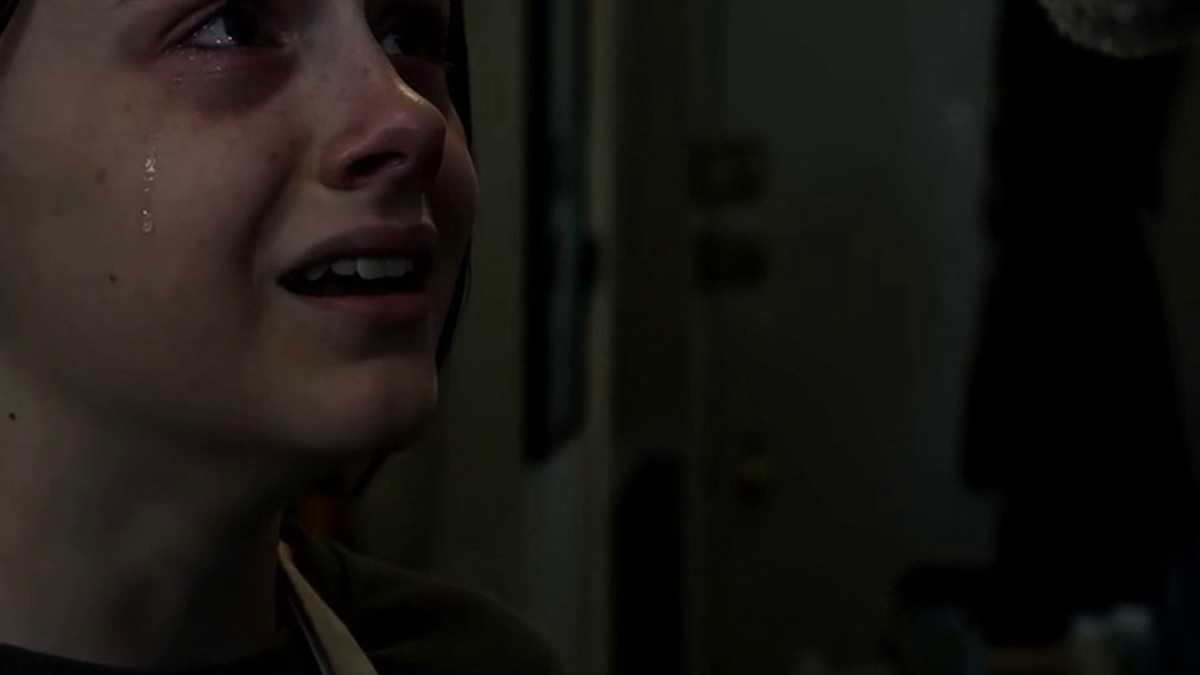
“But who’s going to take care of me?” The question hung in the air, raw and childish. The real message, the hidden one buried under years of bravado, finally laid bare.
I walked over and put my hands on her shoulders and kissed her forehead. “A steady paycheck, a good insurance plan, and maybe one of those hardware-store boys will move up here. Face it, Chloe. You flipped the switch, and now the train is moving. I’m not getting off.”
The tears spilled over. “So you’re just going to abandon me? Just like that?”
“I’m not abandoning you. I’m doing exactly what you wanted. You didn’t want a dad stuck in a rut. You got a dad with a LinkedIn profile. Now, you once promised me no guilt trips, remember? A deal’s a deal.”
She just nodded, a defeated, hollow motion.
I winked at her. “The keys to the house are in my sock drawer. And listen, I need one last favor before I go.”
“What?” she sniffled.
“Your Aunt Carol called. I played her our old song—the ‘stuck in a swamp, no future’ bit. Turns out, she’s fed up with being the county clerk in Birmingham. They’re switching to a digital filing system and it’s driving her nuts. So, I told her about an opening at the municipal archives here. Head archivist. She’s ready for a change before she fossilizes. She’s going to call you to help her pack. Be a good niece and go help her get on the train, okay?”
Chloe just stared at me, a final, crushing realization washing over the mix of betrayal and exhaustion on her face.
“You taught her the whole speech?”
“The whole speech, baby. Carpe diem. You’re not the only one who can spot a future in a big city. I’ll see you for Sunday dinner at Evelyn’s. We’re doing paella.”
I picked up my bag and my tool kit and walked out, leaving her in our tiny apartment, standing utterly still between the cold pizza box and the bright, terrifying dawn of a life she’d built for everyone but herself.