
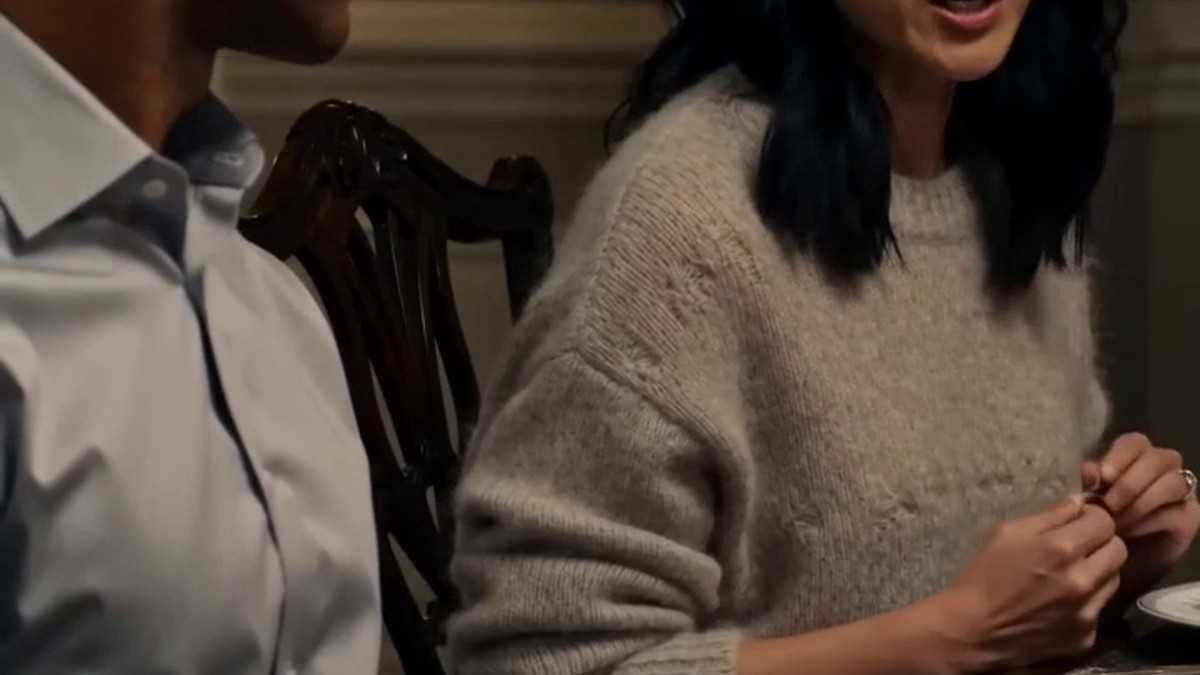
The clinking of silverware on Eleanor’s good china stopped the moment Harold dabbed his mouth with a napkin and cleared his throat.
“From this month forward, all family income will be deposited into a central account, managed by me.”
He said it the same way he’d comment on the Dow Jones—a statement of fact, not a proposal. My mother-in-law, Eleanor, gave a tight, satisfied nod without looking up from her needlepoint. My wife, Jenna, suddenly became fascinated by a loose thread on her cashmere sweater.
I, on the other hand, slowly chewed a piece of pot roast that had turned to cardboard in my mouth.
“I’m sorry,” I said, placing my fork down with a deliberate clink. “Run that by me again?”
Harold folded his veined hands on the mahogany table. “In this family, Marcus, money is held by the seniors. It’s always been that way. My father held the purse strings, and his father before him. Young people today have a… liquidity problem. A new iPhone one day, a trip to Tulum the next, then suddenly you’re up to your eyeballs in credit card debt. So, your paychecks will come to me. If you need a purchase approved, you’ll submit a request. I’ll decide.”
Eleanor added, like a gentle poison, “We only have your best interests at heart, dear.”
I turned to Jenna. My wife. The woman I’d built a life with for eight years. “Jen, did you know about this?”
She gave a helpless shrug, her eyes not meeting mine. “Dad’s been talking about the old ways for a while. He thinks it would create less… chaos. Maybe it would be simpler?”
Simpler. I was a certified public accountant who did forensic audits for a living. I spent my days finding financial chaos and methodically exterminating it. The idea that my life was the chaotic one was almost funny. Almost.
I took a slow sip of water and let the silence hang for a moment. Then, for the first time that tense, suffocating evening, I smiled.
“Alright.”
Harold’s shoulders dropped a quarter inch. He looked like a CEO who’d just crushed a hostile takeover. He started to reach for a leather-bound ledger near his plate, a smug victory in his pale blue eyes.
But I wasn’t finished. I let him almost touch the ledger before I leaned back in my chair and spoke. And my single, calm sentence sucked all the air out of the dining room.
“Then let’s start with the required due diligence. Please present your complete financial statements for the last decade for review.”
The smug victory in his eyes didn't just fade; it was deleted. For a half-second I saw something raw and panicked. Then his face went red. He slammed the ledger flat on the table. “Now just a damn minute. You don’t come into my house and audit me. This is family, not the IRS.”
I kept my voice even. “You want to be the fiduciary of my family’s income, Harold. In my world, a fiduciary who won’t provide a track record is just a guy asking for a blank check. I won’t do that. Not to Jenna, not to Chloe, not to myself.”
He shoved his chair back. “This is ridiculous. Eleanor, we’re finished here.” He stalked out of the dining room. The back door opened and closed with a hard thump.
Eleanor’s hands fluttered over her needlepoint. She wouldn’t look at me. A minute later she produced a three-ring binder with “Household Accounts” embossed in gold flake and a stack of manila envelopes. “You’ll still need to log your net pay here, dear. Every other Friday. And I’ve prepared categorized envelopes for cash allowances.”
She slid them across the wood. “Groceries. Gas and Auto. Home Maintenance. Clothing—for the three of you, of course.”
I stared at the envelopes. “We’re not doing this, Eleanor.”
Her mouth tightened. Jenna put a hand on my arm, her touch dry and cold. We let ourselves out.
On the drive back to our house, the rain streaking the Volvo’s windows, Jenna tried to fill the silence. “He’s from a different era, babe. Grandpa Hank ran the whole family like a small business. All the money went to him. Dad just thinks it’s… the natural order.”
I kept my eyes on the road. “And what do you think the natural order is?”
The silence stretched for three blocks. Finally, she whispered, “I don’t know what I think. I was just trained not to question it.”
My name is Marcus. Thirty-eight. I’m a forensic accountant. Numbers make sense to me; people, a lot less. Jenna and I had a house in a decent Seattle suburb, a Volvo and a Honda with a hundred thousand miles each, and a 529 for our daughter Chloe that I’d mapped to the dollar. We’d never been late on a mortgage payment. We didn’t have a “liquidity problem.”
This wasn’t about money. It was about control.
The next day, my phone buzzed. Harold. “So, we’re on the same page for this coming pay cycle? You just transfer it to the joint senior account. Eleanor will handle the distribution.”
“Harold, that’s not going to happen.”
He let out a short laugh. “Don’t be stubborn about a family tradition.”
“I’m not being stubborn. I’m protecting my family. We can talk again when you’re ready to be transparent. Until then, I’m out.”
I heard him draw breath to argue, but I ended the call. Jenna, sitting across the kitchen island, watched me with a mix of dread and something that might have been relief.
A week passed. Jenna called her mother twice; each time she came away tight-lipped. Then on a gray Saturday morning, the doorbell rang. I opened the door to Harold holding a dusty, dented box—the kind that had once held cheap wine and now held a lifetime of paper.
“These are all the records,” he said. His voice had none of the bullish certainty from before. “Deeds, old tax returns, a bunch of stock certificates for companies that went bankrupt in the dot-com bubble. I don’t know what’s trash and what’s treasure.” He paused, gripping the box so hard the cardboard creased. “You’re the forensic guy. Would you help us sort it out?”
I looked at the box and then at his face. He wouldn’t meet my eyes. “Come in. Coffee’s fresh.”
On the kitchen island, I cleared a space and he set the box down. Dust puffed up. I opened my laptop and pulled up our family’s dashboard—assets, debts, cash flow, projected runway. The screen glowed with clean charts. Harold squinted at it.
“You… you do this every week?” he asked.
“Every Sunday morning. Chloe likes to press the refresh button.”
He almost smiled. Then he opened the box. For the next two hours we pulled out crumbling folders, faded receipts, stock certificates for companies that no longer existed. At one point he found a yellowed deposit slip and stared at it.
“My old man,” he said abruptly, his voice lower than I’d ever heard it. “He had a safe deposit box. That was his whole system—hoard cash, dole it out to my mother like she was a kid asking for allowance. When I was fifteen, he lost everything in some business deal. The bank took the house. After that he just… got smaller. Quieter.” He rubbed his thumb over the slip. “I guess I thought if I held on tight enough, it wouldn’t happen to me. That’s not much of a strategy, is it?”
I didn’t give him an answer. I just sat there, letting the silence do the work. After a moment, I said, “No. But it’s a reason. Now we can build something better.” I pulled the box closer. “Let’s see what’s in here.”
We spent four consecutive Saturdays at that island, a mountain of yellowed paper between us. We built them a real budget. We digitized everything. We closed six old accounts charging obscene fees and consolidated them. We set up a simple automated system and, for the first time in forty years, Eleanor got her own checking account. When I handed her the debit card, she took it with both hands, her thumbs tracing the embossed numbers over and over, as if it were a fragile, precious thing. She didn’t speak. Then she tucked it carefully into the pocket of her cardigan and buttoned the flap.
One year later, at a backyard barbecue for Jenna’s birthday, Harold stood up with a beer in his hand, the smoke from the grill swirling around him. He tapped his bottle with his wedding ring.
“A toast.” He cleared his throat. “To my son-in-law, Marcus. For… for showing me that I still had a few things to learn.” He raised the bottle. “To Marcus.”
A wave of laughter, genuine and warm, washed over the deck. I caught Jenna’s eye. She was smiling, a full, unburdened smile I hadn’t seen in years. Chloe ran past, shrieking with a hot dog in her hand.
Late that night, after the guests had left and the citronella torches were burning low, I was stacking chairs when I noticed Harold still standing by the grill, staring at the embers. I walked over and stopped beside him. Neither of us said anything. After a while, he picked up the last two folding chairs and carried them toward the garage. I grabbed the stacked ones and followed. Inside, the light was off. We set them down in the dark, the aluminum legs scraping softly against the concrete floor, and then we stood there for a moment in the quiet, the crickets loud outside.





