
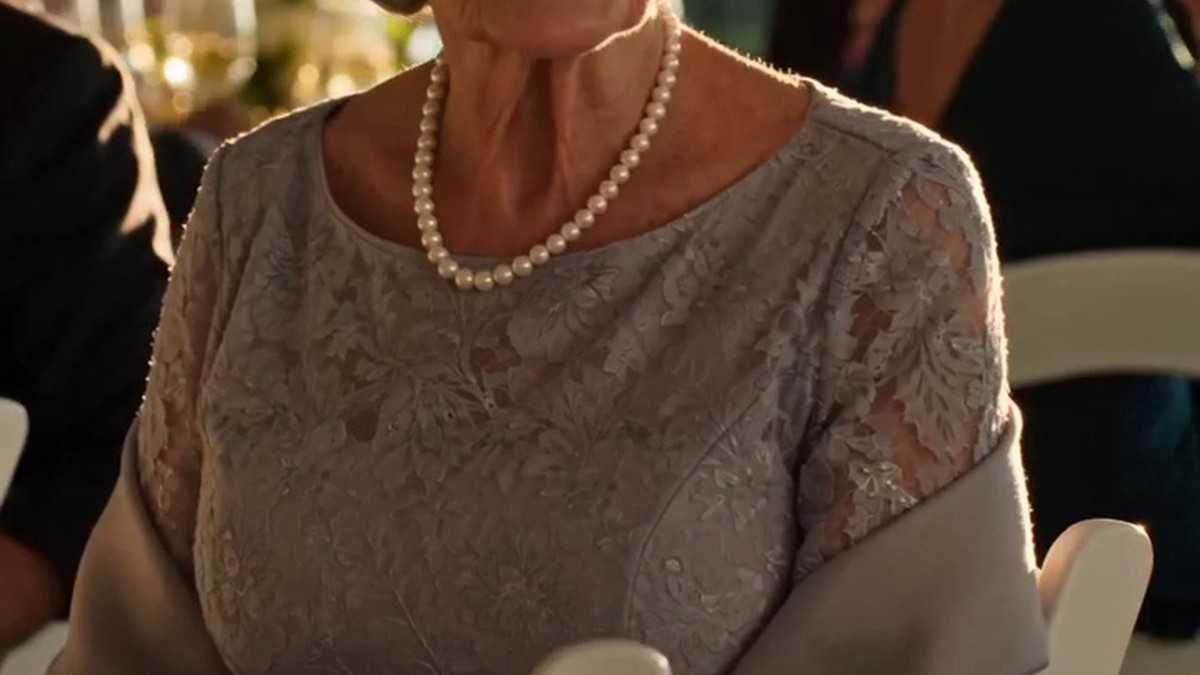
I was setting a lemon tart on the dessert table when my stepdaughter—Daniel’s daughter, Chloe—shoved a paper plate into my chest.
“The help eats in the kitchen,” she said, loud enough for the whole tent to hear. She was twenty-four and had rehearsed that line all morning; I could tell by the smug little twist of her mouth that she was proud of herself.
Laughter rippled over the tables scattered among the vines. Daniel’s uncle snorted into his wine. His cousins twisted in their seats to get a better look. The only person who didn’t move was my husband of seven years, Daniel, at the head of the table, sawing into a piece of tri‑tip as if he hadn’t noticed a thing.
I watched him and waited. A flinch. A glance. Any crumb of proof that the woman he’d married mattered more than a cheap punchline. Nothing. He chewed, swallowed, reached for his Cabernet.
His mother, Patricia, leaned back in the folding chair I’d paid to rent and gave me the stare she kept for a misbehaving dog. “There you go again, demanding to be the center of attention. Sit down, apologize to Chloe for embarrassing her, or leave.”
Daniel finally lifted his eyes. Not to defend me—just to offer that tired, patient frown he wore whenever his family’s comfort was at stake. The same look he’d given me when I suggested Chloe pay her own rent, or when I hesitated before writing another check to rescue the winery. For seven years I’d swallowed that look. I’d paid Chloe’s college tuition after a bad harvest. I’d cleared the second mortgage Patricia had taken on her house in Healdsburg. I’d settled a lawsuit when Daniel’s brother tried to cheat a distributor. Every time, Daniel called it keeping the family together.
This time Chloe had found the simplest way to tell me what they really thought.
I set the paper plate down on Daniel’s untouched napkin. “I’m not apologizing. And you’ll never have to worry about me embarrassing anyone again.”
Daniel rolled his eyes. “Juliet, for God’s sake, cut the dramatic exit.”
“It stopped being dramatic the moment you decided your daughter’s joke was worth more than your wife.” I grabbed my purse from the grass and walked toward the gravel driveway. A few uncertain laughs chased me, but the sound was thinner, less sure. Patricia called my name like she was scolding a child who’d wandered too close to the road.
I had come back to the vineyard that afternoon for two reasons. The first was to clear my grandmother’s cameo out of the safe in my office. The second was a mean little hope I couldn’t shake—that if I gave them one last chance to be decent, they might take it. They didn’t. I’d spent eight months preparing to leave, and now the only thing left was to let them find the blue envelope.
Beneath Daniel’s dinner plate was the envelope I’d tucked there before anyone arrived. Inside: signed divorce papers, a forensic accountant’s report, and formal notice that every personal guarantee I’d ever signed for Hastings Family Vineyards was withdrawn. There was also a crisp color still from the security camera in my office—Daniel at two in the morning, using his phone to photograph the login credentials for my private investment account. He hadn’t managed to steal from me directly, but a week earlier Chloe had used those credentials to start a wire transfer of seven hundred and fifty thousand dollars out of my account into the winery’s operating fund. The note she’d typed read, “Dad’s money back.” I’d spotted the pending request within hours and told the bank to freeze it. The freeze, linked to a fraud investigation I’d opened weeks before, locked every account tied to the winery and to Daniel personally.
I drove thirty minutes to the Santa Rosa airport, bought a one‑way ticket to Portland, and sat at the gate with a black coffee that was already going cold. While I waited to board, I pulled out my phone and opened an app I’d never expected to use more than once. A month earlier I’d hidden a tiny camera in the lantern above the dinner table. Call it paranoia. Call it insurance.
On the screen, the warm evening light was fading over the vineyard. The caterers were clearing plates. Patricia was gesturing at my empty chair. Then a process server named Marcus crossed the lawn with a thick packet of documents under his arm. He handed the blue envelope to Daniel.
Daniel opened it. His face went slack for half a second, then a deep, ugly red crept up his neck. He pulled out the photo of himself hunched over my computer, and his hand jerked—the wineglass he’d been holding hit the pavers and shattered. Patricia lunged for the table edge, her knuckles bone‑white. Chloe’s laughter cut off so fast a cousin later described it as a switch flipping. The uncle who’d toasted her joke set his glass down and didn’t touch it again. The rest of the family just sat there, mouths half‑open, the way people do when the foundation they’ve been standing on disappears and they finally, genuinely, understand it was you all along.
I turned off the phone and boarded a plane.
By the next morning the bank had yanked the winery’s credit line—fraud flags trigger that automatically. Without my signature backing the equipment lease, the new bottling line got hauled away before lunch. Patricia’s house, which she’d put up as collateral on a loan I’d co‑signed, had a notice of default slapped on it by the end of the week. The distributor who’d been patient through two late payments suddenly demanded cash on delivery, and nobody had it.
Two weeks later I was sitting on a balcony above the Willamette River, a cup of coffee going cold in my hands, when my phone buzzed with an alert from the Sonoma County recorder’s office. A notice of trustee’s sale. Hastings Family Vineyards, the forty‑three acres Daniel’s grandfather had planted by hand, scheduled for auction in thirty days. No white knight had appeared. Patricia’s house was in foreclosure. Chloe’s BMW—the one I’d co‑signed for, of course—had been repossessed. Daniel kept calling a number that no longer rang anywhere.
I deleted the alert. A light rain started, the Oregon kind that never quite decides to fall. I thought about the five o’clock hour back in California, the dinner service that wouldn’t happen, Daniel probably sitting in a dark office trying to call me from his own phone now blocked and useless.
Then I didn’t think about it anymore. I picked up my coffee, found it cold, and poured it over the railing into the river. I went inside to make a fresh pot. Only enough for one, this time.





