Marcy knew the voicemail was bad news before she even pressed play.
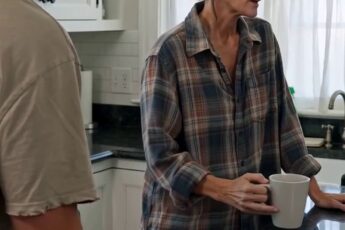
It was the way Leo’s shoulders had dropped the second his phone buzzed, the way he’d carried it out onto the balcony like it was a live grenade. She watched him through the sliding glass door, standing in the sticky Houston heat, his free hand rubbing the back of his neck. His lips moved, but she couldn’t hear the words. She didn’t need to. She’d seen this movie before.
When he came back inside, the air conditioning felt ten degrees colder. He wouldn’t meet her eyes.
“Let me guess,” Marcy said, not looking up from the stack of packing tape and flattened boxes on their dining table. “Your mom clicked on another article about contaminated groundwater in Phoenix.”
Leo sighed, a heavy, defeated sound. “She says her hip’s out again. She’s stuck in her recliner. She’s been crying all morning.”
“Of course she has.” Marcy picked up the tape gun and sealed a box with a single, brutal, ripping motion. “Her hip goes out every time we get another signature closer to the closing date. It’s a medical miracle.”
“Marcy, come on…”
“No, Leo, you come on.” She finally turned to him, her hands resting on her belly, which was just starting to show. “The first time was the open house. She fell in the garden. Then it was a dizzy spell the day we met with the mortgage guy. Last week, when I booked the moving truck, she had a panic attack that lasted four hours. Your dad is texting me, asking what we’re doing to her. This isn’t bad luck. This is a strategy.”
Leo’s jaw tightened, but he said nothing. That was the worst part. The silence. The man who could debate a hostile CFO into submission for his company couldn’t find a single word for his own mother.
Marcy remembered when things were different. Darlene used to send her birthday cards with handwritten poems inside. She called her “the daughter I always wanted.” She’d fly down from Oklahoma City for long weekends, and they’d drink too much rosé on the patio while Leo grilled burgers. Darlene would tell stories about Leo as a clumsy kid and laugh until she cried. She was kind, generous, the matriarch who only wanted her son’s happiness.
That was before the promotion. Before Phoenix. Before Marcy got pregnant.
The moment they announced they were leaving, the warmth in Darlene’s voice turned to something sharper, something brittle. “Leaving Houston?” she’d said, her smile not quite reaching her eyes. “But all your friends are here. Your whole life is here. I’m here.”
“We’ll be a two-hour flight away, Mom,” Leo had said, so casually, so naively. “You can visit whenever you want. We’ll have a pool.”
Darlene had looked at Marcy then, not at her son. And in that unguarded split second, Marcy saw something she’d never noticed before: a flicker of pure, territorial panic. A queen watching her subject claim a new kingdom.
The health emergencies started three days later.
—
They found the house on a Tuesday. A mid-century ranch in Scottsdale with a lemon tree in the backyard and a spare bedroom that Marcy had already painted, in her mind, a soft, gender-neutral yellow. The payment was a stretch, but it was theirs. Their future.
The real estate agent, a no-nonsense woman named Valerie, called at four o’clock. “Got another bid. Cash offer. We need your answer in six hours, or you’ll lose it.”
Marcy’s pulse hammered in her throat. She called Leo at work, her words tripping over themselves with excitement. “This is it, babe. This is the one. We have to do it.”
They met at the agent’s office at seven, hands shaking as they signed the formal intent to purchase. Marcy’s heart was so full she thought it might burst. They drove home in a giddy, terrified daze, and Leo pulled her into a bear hug on the front lawn of their rental, right there under the streetlight, spinning her once before setting her down gently, as if she were made of glass.
His phone rang as they walked through the front door.
He held up a finger and stepped into the kitchen. Marcy stayed in the hallway, her coat still on, watching him through the pass-through window. His face, which had been bright with joy moments before, just… dissolved.
He came back out and looked at the floor.
“Mom says if we move, she’ll write me out of the will,” he whispered. “Everything. The house, the lake cabin, the investments. But that’s not the worst part.” He finally looked up, and his eyes were red. “She said that if I loved her, I wouldn’t do this. That if I take this job, if I take you and the baby away, I can just consider myself without a mother. She said I’d be killing her as sure as if I put a gun to her head.”
The air left Marcy’s lungs. This wasn’t a sprained hip. This was a nuclear strike.
She saw him wavering. She saw the little boy in him, desperate for approval, terrified of being cast out. The man who could fight for anything was about to give up on the one thing that mattered.
Something inside Marcy snapped. But it wasn’t a hot, screaming snap. It was a cold, silent fracture. A steel rod sliding into her spine.
She walked to the hook by the door and picked up her car keys.
“Get in the car,” she said, her voice completely flat.
“What? Where are we going?”
“We’re going to end this. Now.”
—
The drive to Kingwood, to the sprawling brick house Leo grew up in, took forty minutes in silence. Marcy gripped the steering wheel, her knuckles white. Leo just stared out the passenger window.
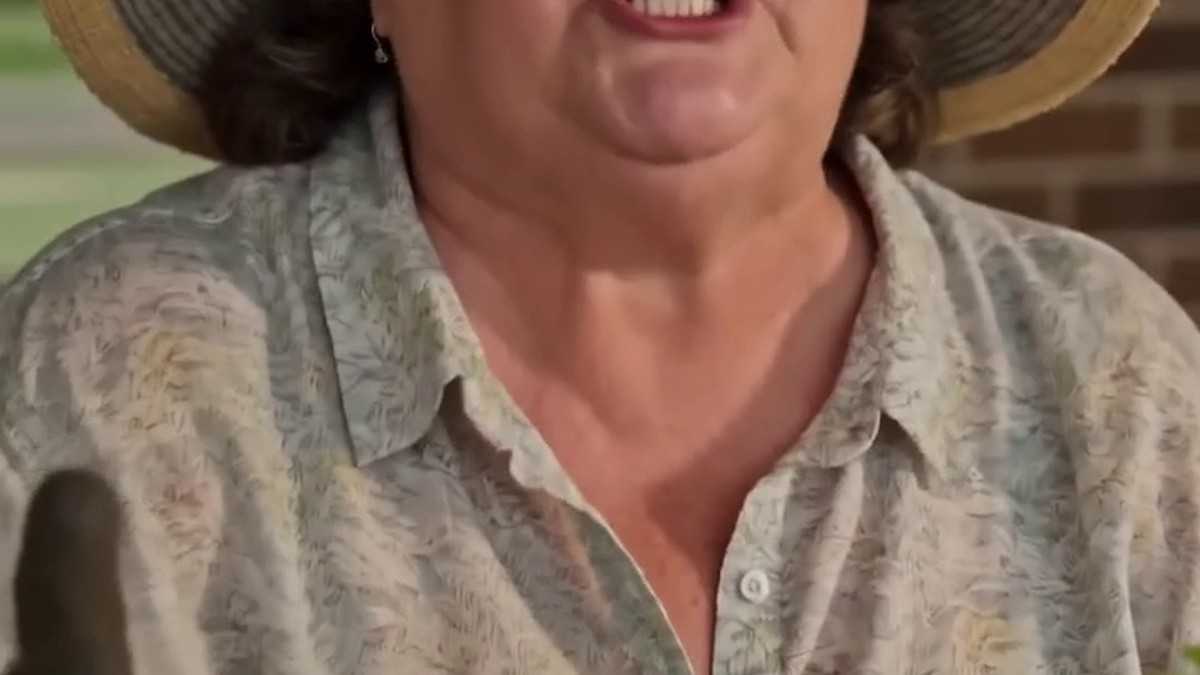
They didn’t knock. Marcy used the key she’d been given years ago, a symbol of their old, easy trust. They found Darlene on the back porch, not in a recliner, not crying. She was standing at her potting bench, wearing a sun hat, happily re-potting a fern. A glass of iced tea, still sweating, sat next to a plate of half-eaten country club finger sandwiches.
When she saw them, her face flickered through a dozen emotions in a second. Surprise. Guilt. And then, finally, it settled on a familiar, theatrical mask of distress. She clutched the edge of the potting bench.
“Leo! Thank God you’re here. My hip, it’s just—”
“We saw the paperwork, Darlene,” Marcy said, her voice cutting through the warm evening air.
Darlene’s hand froze mid-clutch. “What paperwork?”
“The intent to purchase,” Marcy said, taking a step forward onto the slate patio. “Leo is signing it in the morning. The money’s already been wired for the deposit. We’re moving in two months.”
Darlene’s mask slipped, revealing raw, ugly fury beneath. She turned all her attention to Leo, her voice dropping into a ragged, wounded whisper. “You see? You see what she makes you do? She’s tearing this family apart. I sacrificed everything for you. Everything! I gave up my career for you when your father died. And this is how you repay me? By letting her drag you into the desert to die?”
It was a masterpiece of manipulation. A dizzying cocktail of guilt, love, and ancient obligation.
Marcy watched her husband. This was the moment. The hinge on which their entire life would swing.
Leo took a deep breath. He stood up a little straighter. And for the first time in his life, he looked at his mother not as a child, but as a man.
“No, Mom,” he said, his voice quiet but solid as concrete. “You sacrificed everything *for* me. Not *to* owe you for the rest of my life. That’s not a gift, that’s debt. And I’m not paying it anymore.”
Darlene recoiled as if he’d slapped her. “You don’t mean that.”
“I am going with my wife. We’re having this baby. And if you can’t be happy for us, if the only way you can love me is by sinking your hooks into me and reeling me back in every time I try to live my own life—then that’s not a love I can carry with me. The door to our home is open. Always. But only if you walk through it as my mother, not my warden.”
He didn’t wait for a reply. He turned around, took Marcy’s hand, and they walked back inside the house and out the front door. Behind them, Darlene didn’t cry or scream. She just stood frozen, her hand still hovering over the fern, a woman who had just realized all her levers had been disconnected from the machine she was trying to control.
—
They signed the final paperwork the next day. Leo’s hand was steady.
A year passed with the speed of a fever dream. The move to Arizona, the slow, hot afternoons setting up the nursery, the terrifying, exhilarating rush to the hospital. The moment their son, Noah, took his first breath and screamed his tiny, furious scream, Leo clutched Marcy’s hand and wept.
The silence from Darlene was absolute. Not a card, not a call. Marcy felt a pang of sorrow for the grandmother Noah would never know, but every time she looked at her husband’s face, relaxed and open and free from that chronic, gnawing guilt, she knew they’d made the only choice they could.
Then, on a random Wednesday in October, when the desert heat had finally broken, the doorbell rang.
Marcy opened the door.
Darlene stood on the stoop. She looked smaller, somehow. The iron in her posture was gone. In her arms, she held a simple, beautifully wrapped box.
“I don’t have a key to this one,” she said, her voice uncharacteristically shaky. “May I come in? I’d like to meet my grandson. If you’ll let me.”
Marcy looked past her, at the lemon tree in the backyard, bright and golden in the afternoon sun. Then she opened the door a little wider.
“We’re on the back porch,” she said. It wasn’t forgiveness. It was an invitation to begin the long, difficult work of earning it.