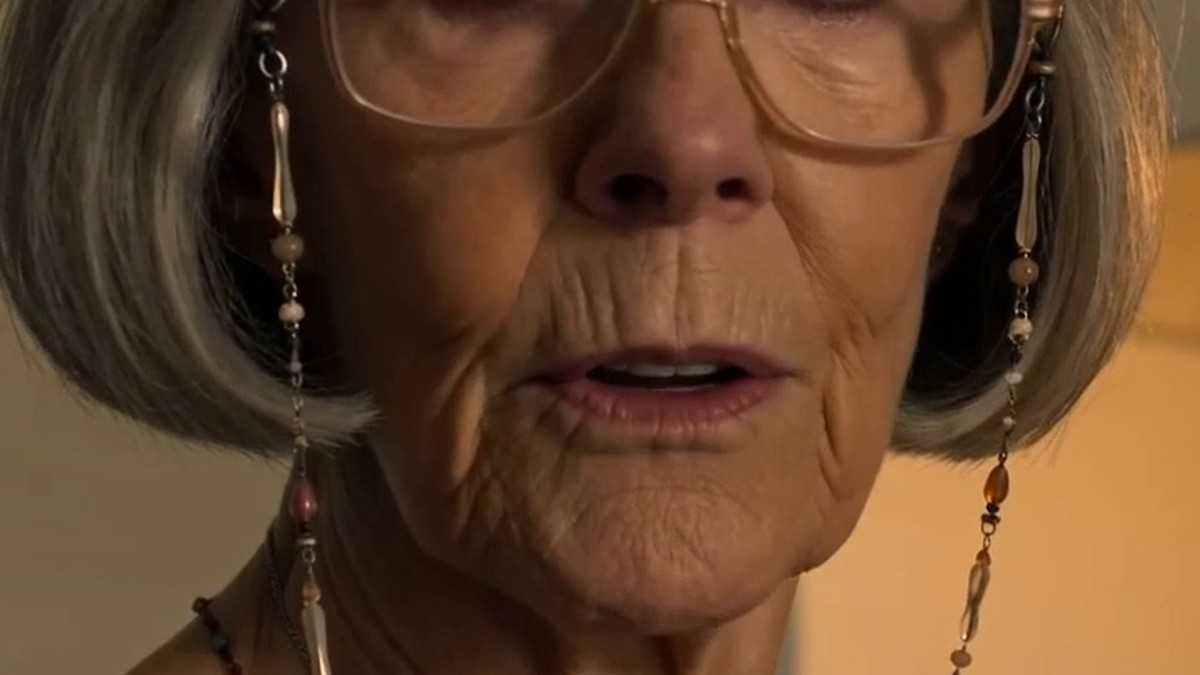
The last time Maggie truly felt like she was drowning was in a Target parking lot in Naperville, Illinois, on a Tuesday afternoon. She was fifty-seven. The cart was loaded with two-for-one apple sauce pouches and Paw Patrol band-aids for grandkids who, if she was being honest with herself, she didn’t see all that much. The sun was bleaching the asphalt white. A man in a Prius honked at her for no reason. And she just stood there, keys in hand, unable to move, thinking about a pan of lasagna from 1995.
She’d married late, at thirty-two. Her mother, Viv, a tough Irish woman with a drinking problem she’d never admit to, had practically held a funeral. “A degree in art history and a pretty face, and you throw it at a mechanic from Melrose Park,” Viv had sniffed, pouring herself a generous bourbon at the rehearsal dinner. Dean was a mechanic, yes, but he owned the shop. He was brilliant with engines and, as it turned out, a total sociopath with people. The charm evaporated roughly four hours after they got back from the honeymoon in the Wisconsin Dells. He started correcting her. The way she breathed, the way she folded his shirts, the gray in her hair that “wasn’t there when we met.” Maggie, desperate to make the thing work, just folded herself smaller and smaller until she was practically invisible.
Then came Jason. A colicky baby who screamed for eleven months straight. Dean moved into the spare bedroom because he needed his sleep for the garage. He left for good when Jason was three, moving in with a dental hygienist from Lombard who drove a Trans Am. He paid exactly three months of child support before declaring bankruptcy and moving to Florida. Maggie was free, and broke, and completely terrified. But she had the kid.
The kid became the project. The whole project. Maggie worked at a title company downtown, a tedious job with good benefits, and she poured every single cent of her paycheck into a force-field of opportunity for Jason. Travel soccer. Mathnasium. A MacBook Pro for a high school graduation present because “you need the best tools, honey.” He wanted to be an architect, which felt like a cosmic gift—she had always loved buildings. She got him an internship with a friend’s firm. Her own wants just… evaporated. A forgotten appointment. A new winter coat she didn't buy. A trip to Sedona with the girls she turned down because Jason had a cold. Before she knew it, thirty years had passed, and she was living in a small bungalow in Oak Park with photographs of Jason taped to the refrigerator instead of her own life.
When Jason graduated and landed a junior role at a good firm in the Loop, she felt a terror so sharp she couldn’t name it. It wasn't pride. It was the void. The project was complete. What was she supposed to do now?
She found out fast. Jason met Chloe at a lake house party in Michigan. She was a marketing manager at a tech startup, all sharp bangs and sharper elbows, with a way of saying “Thank you, Maggie,” that felt like a door closing. The wedding was a lavish affair at a vineyard in Barrington that Maggie helped finance by liquidating a CD she’d had since 1991. At the reception, her mother Viv, now ninety and living in a care facility, had pulled Maggie close. The old woman’s fingers were like bird bones wrapped in tissue paper. She smelled of menthol and decay.
“You’re a ghost at your own party, Maggie-girl,” Viv rasped, her eyes watery but sharp. “You spent your whole life building him a pedestal so high you can’t even see his face anymore. And that girl he married… she sees you as a checkbook, nothing more. She’s already mentally redecorating your house.”
Maggie had laughed it off, a hollow sound. “Mom, you’re being dramatic.”
“I’m being dead soon,” Viv had said flatly. “And he won’t catch you when you fall. You’ve fed him so much of your heart, he thinks it’s his property by now.”
When Viv passed six months later, the quiet in Maggie’s house became a physical thing, a low hum. She’d come home from the title company to silence, the air thick with the ghosts of violin practice and the smell of chicken nuggets. Jason and Chloe lived in a sleek condo in Lincoln Park that Chloe’s parents had helped them with, and they were busy. So very busy. The calls went from weekly to monthly to random Facebook likes. Maggie tried to re-enter her own life. She joined a community garden and a book club that met in a dusty independent bookstore on Harrison Street. That was where she met Walter.
Walter was a retired professor of botany with dirt under his fingernails and a laugh that made his wire-rimmed glasses vibrate. He was seventy and absurdly kind. He started leaving heirloom tomatoes on her front porch, then stayed for iced tea, then for dinner. It wasn't a fiery, movie-star romance. It was a steady, quiet companionship—two people with a whole lot of rear-view mirror, deciding not to drive alone anymore. He moved into the bungalow in Oak Park, bringing his extensive jazz vinyl collection and a peace she’d never known. For the first time, the photos of Jason on the wall felt like memories, not a lifeline.
The request came over a Sunday brunch scramble. Jason and Chloe had deigned to visit, staring at their phones between bites of egg. Chloe kicked Jason under the table, a move Maggie saw but pretended not to.
“So, Mom,” Jason started, his voice taking on a strange, tinny quality. “We’re really squeezed in the condo. And with the baby coming… we need a yard. A house. Real space.”
Maggie’s face lit up. A grandchild. “Oh, honey, that’s wonderful! I can help paint the nursery…”
“Actually,” Chloe interjected smoothly, forking a piece of melon. “We were thinking of a different solution. A more logical one. You and Walter are here, in this drafty old place.” She gestured vaguely at the stained-glass window and the hardwood floors Maggie had refinished herself. “We need a bigger place. It makes sense. You should move into Viv’s old condo in Schaumburg. It’s smaller, easier to manage. And we’ll take this house. We can host Christmas, you can have a little room when you visit…”
The words hung in the air like a poison cloud. The condo in Schaumburg. A beige two-bedroom box near the highway where her mother had withered away, a place that smelled faintly of cigarettes no matter how much you scrubbed. They weren't asking to swap. They were giving her permission to leave her own home. Walter’s fork froze halfway to his mouth. He looked at Maggie, waiting.
The old Maggie, the one who gave away her coat and her comfort and her very identity for a smile from her son, would have said yes before the sentence was finished. But that woman had been burned so low, she was basically ash. And from those ashes, something hard and new had been forged, partly by Walter’s quiet devotion, and partly by the memory of her mother’s skeletal hand on her arm.
She smiled, but it didn’t reach her eyes. “That’s a bold plan, Chloe. Trading you a four-bedroom craftsman for a leaky two-bedroom with a view of the interstate.”
Jason flushed. “Mom, it’s not just a trade. It’s for your grandson. For our family. We’re trying to think practically.”
“Oh, you are thinking practically, I can see that,” Maggie said, her voice dangerously calm. She stood up and walked over to the wall. She pulled down a taped-on photo of Jason at his eighth-grade science fair, the paper yellowed and curled. She looked at it, then at him. “You want my home. The home I paid for on my own, scrubbing your grass stains out of these floors. You want to give me your grandmother’s old closet in exchange.” She tossed the photo onto the kitchen table between the half-eaten eggs. “No.”
Chloe’s face hardened into a perfect mask of corporate displeasure. “We thought you’d want to help. Jason said you were always so generous.”
“He was a child then,” Maggie said, looking directly at her son. “Now he’s a man asking his mother to become invisible so he can have a nicer zip code. The answer is no. The house is mine until I’m dead and gone.”
The silence was absolute, broken only by the soft hiss of the kettle. Jason looked like a boy who’d just had a bright balloon pop in his face. He didn’t look angry. He looked baffled. The machinery of his entitlement had just seized up.
They left ten minutes later. Chloe didn’t finish her melon. Walter, who hadn’t said a word, got up, took Maggie’s hand, and started slow-dancing with her right there on the cold kitchen tiles to the hum of the refrigerator. He didn’t say a thing. He just held her.
—
Maggie sat on the porch that evening, a cool autumn breeze rustling the fallen oak leaves. She was sixty-eight now. Walter had passed in his sleep two years prior, a gentle exit for a gentle man. She still missed the weight of his hand on her back. After he was gone, she’d done the logical thing. She’d sold the bungalow in Oak Park and moved into the Schaumburg condo of her own volition, not as a concession, but as a liberation. The sale of the house had given her a massive, glorious nest egg. She traveled to the Greek islands. She sent the girls—Jason’s now-teenage daughters, sweet girls with their father’s bewildered eyes—birthday cards stuffed with cash and took them to New York to see musicals, but strictly on her own terms.
A silver Acura pulled up. Jason got out, alone. He was heavier now, his hairline receding, the look of a middle manager perpetually waiting for the ax to fall. He’d brought a bag of groceries she hadn’t asked for.
“Hey, Mom.” He kissed her cheek. His stubble was scratchy.
They sat on the small balcony, the roar of 290 a constant in the background. He was trying too hard, talking about the girls and his new job selling construction supplies. Finally, he lapsed into silence, staring at the highway’s dead-end energy.
“You came alone,” Maggie said, stating the obvious.
“Chloe’s… it’s a bit strained, you know,” he mumbled.
Maggie nodded. She wasn’t going to fix it. She wasn’t going to apologize. She opened the cooler Walter had given her, pulled out two cold bottles of root beer, and handed him one. The twisted, ancient tree in the courtyard below was starting to bud. On the little plastic table between them sat a single framed photo—not of Jason as a child, but of Walter, holding a gigantic, misshapen tomato, his grin taking up half his face.
Jason followed her gaze. “He was a good man.”
“He was a man who showed up,” Maggie said simply, taking a sip. “It’s a different category of thing.”
He flinched, the blow landing right in the soft center. For a long moment, he didn’t speak. Then, quietly, his voice cracking around the edges, he asked, “Are we… are we going to be okay?”
Maggie looked at her son. All that love she’d poured into him, it was still there, a bottomless subterranean lake. But she wasn’t going to drown herself in it just so he could have a drink. She reached over and squeezed his hand, his knuckles so much bigger than they’d been when he was five, gripping a crayon.
“That depends entirely on what you do when you walk off this balcony, Jason,” she said. She let go of his hand and looked back out at the tree, her face calm, the afternoon sun feeling warm and permanent on her skin. The highway droned on. He stayed.