Claire traced the crack in the ceiling of her rental house for what felt like the thousandth time. Spokane was gray outside her window, a low damp sky pressing down on the identical rooftops of her neighborhood. The clock on the microwave blinked 11:47 p.m. No messages. Maya, her daughter, was doing a summer internship in Portland and texted maybe twice a week. The silence in the house was a physical thing, heavy as a wet wool blanket.
She was forty-four years old, made $41,200 a year processing insurance claims at a cardiology clinic, and owned a degree in accounting that she’d never been allowed to hang on the wall. Her back molar throbbed from grinding her teeth in her sleep. And she was terrified that this was it. That the whole second half of her life would be this exact stretch of quiet, punctuated only by the drip of the bathroom faucet she couldn’t fix.
She’d met Ricky the summer after high school, at a bonfire out on the reservation line. God, he’d been something then. A dirt bike racer with a crooked grin and a laugh that made every head turn. He smelled like gasoline and cheap deodorant, and he’d picked her up and spun her around like she weighed nothing. They got married at the courthouse when she was nineteen.
The first time he called her a whore, she was twenty-two. He was hungover, his eyes like two flat pennies, because she’d smiled at a waiter at Applebee’s. The first time he put his hands on her, she was pregnant. He apologized for three days straight, bought her a necklace from the mall, and she told herself it was a one-time thing.
It wasn’t.
For twelve years, Claire walked on eggshells. Ricky’s drinking was a runaway train. He got fired from the Ford dealership, then the body shop. She worked double shifts at the medical billing office while he sat on the couch, a growing mountain of Pabst Blue Ribbon cans at his feet, letting her know she was getting too big for her britches.
The night that broke her was a Tuesday in March. She’d finished her associate’s degree online in business management. It took her six years of night classes while he watched pay-per-view. The diploma arrived in a thick cardboard envelope. She didn’t cheer, didn’t shout, just slid it onto the kitchen counter so he could see it when he came home.
He came home drunk. He stared at the paper, his jaw working like he was chewing on a wasp. “What the hell is this?” he’d slurred. “You think you’re better than me now? You think some piece of paper makes you a goddamn queen?”
He didn’t burn it. He didn’t have to. He took it outside to the backyard fire pit, the one he used for his beer can trash fires, and he made her watch. Then he grabbed her laptop — the one she’d written all her papers on — and smashed it on the patio concrete. He said she was getting ideas. He said pride was a sin.
She left with Maya, a single suitcase, and a restraining order.
The years after were a slow, agonizing climb out of a pit. She rented the house in Spokane, found the job at the clinic, and kept her head down. The loneliness wasn’t immediate. It crept in slowly, filling the spaces Maya left behind as she grew up. By the time Claire turned forty-four, the quiet had calcified around her. She didn’t date. The thought of another man’s hands, another man’s unpredictable temper, made her stomach clench into a fist. She had decided, without ever saying it out loud, that the rest of her life would be a sterile, safe, silent waiting room.
And then the ceiling in the spare room collapsed.
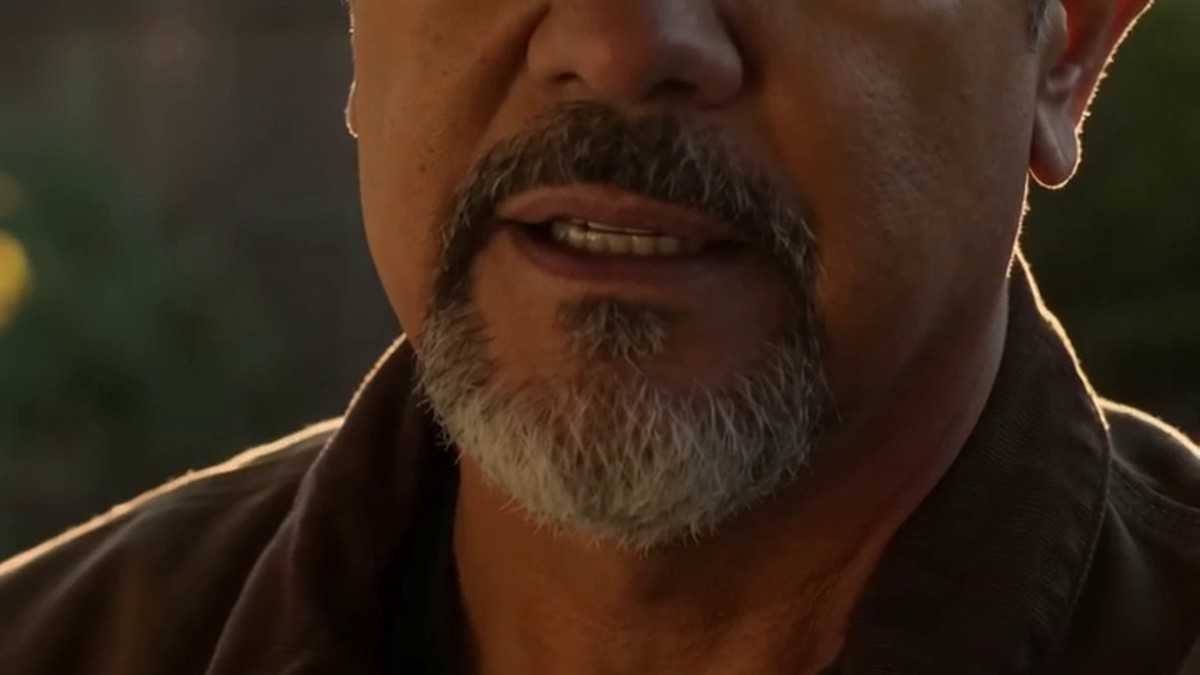
The landlord, a useless hedge fund in Seattle, sent a contractor. He arrived at 7:30 on a Saturday morning, a solid guy in a dusty Carhartt jacket with a silver beard and eyes the color of river stone. He had a tool belt slung low on his hip and a clipboard in his hand. The estimate was $1,150, and she’d spent two nights staring at that number on the kitchen table.
“You Claire? I’m Sam. They sent me about the wet drywall.” His voice was gravel and calm.
“It’s all yours,” she said, pointing down the hall. She noticed his hands. Capable, scarred, clean. No nicotine stains.
He worked for three days straight. She’d leave a pot of coffee on the kitchen counter, and by noon, it would be empty. He didn’t try to make small talk. He didn’t stare at her. He just worked, whistling low, off-key tunes from old seventies rock songs. On the second day, she noticed he’d fixed the dripping bathroom faucet without being asked. On the third day, he tightened the loose railing on the front steps.
“Saw it wobbling,” was all he said, wiping his hands on a red rag.
She was so unused to casual, uncharged kindness that it made her dizzy. *This is a trick,* the old, scarred part of her brain whispered. *He’s building credit. Wait for the bill to come due.*
On his last day, he finished early. She came home on her lunch break to find him sitting on the porch steps. He stood up when he saw her, holding his clipboard like a schoolboy.
“All done,” he said. “You’ve got a good little house here. Needs some updates, but the bones are strong.”
“You want a beer?” she asked, out of reflex. Ricky’s world ran on beer. Sam shook his head.
“Nah. I’d take a Coke if you’ve got one, though. Seventeen years sober come July.”
She paused, her hand on the screen door handle. Seventeen years. She did the math, imagined the calendar. She thought of the sixteen years she’d spent bracing for the next blow. Her thumb pressed a small dent into the aluminum handle.
They sat on the porch, and he told her about his own wreckage. A DUI back in his twenties that cost him his first marriage. A son in Boise who barely spoke to him. The long, brutal process of putting himself back together, one day at a time. He didn’t talk about it with pride or shame. He talked about it like a mechanic describing an engine rebuild. *Here’s the thing that broke. Here’s what I had to do to fix it.*
Claire heard herself laugh at one of his jokes, and the sound startled her. It was a real laugh, not the tight, polite noise she made at work.
Sam never left. His contract ended, but he kept showing up. He’d drop by to “check on the drywall,” and then he’d be under the sink re-caulking the drain. He fixed the loose tile on the porch, brought her a bag of soil for the dead flower beds. He didn’t bring roses. He brought a bag of potting mix and a six-pack of marigolds. “Sixty-five cents apiece at the hardware store,” he said. “Figured they’d brighten the place up.”
It was the marigolds that undid her.
She came home one Friday, and he was on his knees in the dirt in front of her house, planting them. He wasn’t doing it to impress her. He was doing it because he’d heard her mention, once, that the empty beds made her sad.
Her breath caught. Her fingers wrapped around the edge of the screen door, the metal biting into her palm. Ricky had been wonderful at the start too. He’d fixed her car, bought her a giant stuffed bear at the county fair. The charm before the storm. The violence had been so gradual, a tightening noose masked by smiles. What did she really know about this quiet stranger?
She exploded on him from the porch. “Sam! What are you doing? Why are you here all the time? I don’t need saving, okay? I don’t need another man who’s just going to…” Her voice cracked, and the hot tears she’d been holding back for a decade burned her eyes. She stood there, arms wrapped tight across her chest, fingernails digging into her elbows, waiting for him to call her crazy, to tell her she was being a bitch.
Sam stood up slowly. He brushed the dirt from his jeans, his face unreadable. He didn’t step closer. He didn’t try to touch her. He just looked at her with those steady river-rock eyes.
“Claire,” he said, his voice dropping even lower. “Look at me.”
She did.
“I know what you’re doing,” he said. “I know that look. My ex-wife had that same look for the last two years we were together. The waiting for the other shoe to drop. I am not that shoe.”
He took a deliberate step back, putting more space between them. “I’m a fifty-year-old recovering alcoholic who charges thirty-five bucks an hour to hang drywall. I’m not going to sweep you off your feet. I’m not going to promise you a castle. All I’ve got is this.” He gestured at the marigolds, at the porch, at himself. “I can fix things. I can be steady. That’s the only promise I can make. If you want me to go, I’ll go right now and I won’t bother you again. But I’m not going to fight you. I’m done fighting.”
She let her arms fall. Her jaw unclenched, the ache spreading into her temples. The script in her head had been shattered. No rage. No manipulation. Just a man, standing in her yard, willing to walk away.
She didn’t tell him to go.
She asked him to stay for coffee.
Six months later, on a crisp October afternoon, Claire found herself on a small wooden bridge overlooking the Spokane River. The water was fast and clear, the aspens along the bank a brilliant blaze of yellow. Sam was beside her, one warm hand resting on the small of her back.
He didn’t get down on one knee. He didn’t make a scene. He just pulled a simple, thin silver band from his pocket. It was worn smooth, an antique. “This was my grandmother’s,” he said, his voice a little rough. “She wore it for sixty-two years. My grandfather was a mean drunk until he wasn’t. She stuck around. He got sober. They built a whole life on the other side of it. I always kept this to remind myself that it’s possible.” He looked at her, and his eyes were glassy, but his hand was steady. “I don’t need an answer now. Just… take it. Consider it a down payment on a quiet life. A safe one. With me.”
Claire took the ring. She turned it in her fingers, feeling the faint scratches along the inside, a ghost of a date she couldn’t quite read. Then she slid it onto her finger. It fit.
She didn’t whisper “yes” through tears. She didn’t jump up and down. She just reached up, cupped his bearded jaw in her palm, and kissed him slowly, tasting coffee and the crisp river air.
A week after they moved into Sam’s small, sturdy house on the edge of town, Claire came downstairs early on a Sunday. Sam was in the kitchen, making pancakes. On the wall above the little breakfast nook, he’d hung her business management degree. He’d built a frame for it himself out of reclaimed barn wood. There was a small, brass light attached to the top, illuminating the embossed gold lettering.
He glanced over his shoulder, a spatula in his hand. “I figured it was time that got a proper place,” he said. “No one’s ever touching it again.”
Claire walked over, stood on her tiptoes, and kissed his cheek. She sat down at the table and pulled her knees up. On the refrigerator, tucked under a magnet from a local pizza joint, was a photo of Sam and a younger man holding a stringer of trout, squinting into the sunlight. Sam saw her looking.
“My boy Jake,” he said. “He’s driving up from Boise for Labor Day. First time in four years. He’s still not crazy about the old man, but… we’re working on it.” He flipped a pancake and caught it in the pan. “Baby steps.”
Claire smiled, propping her chin on her hand. Sam slid the pancake onto her plate. Outside, the wind nudged the last of the marigolds against the porch railing. The griddle sizzled, and the radio, perched on the windowsill, played a Fleetwood Mac song she almost remembered the words to.