I didn’t understand, at first, that I was slipping away.
It didn’t feel like the end.
It felt like becoming invisible in my own home, while the one person who should have noticed simply chose not to.
“Emily, don’t start this today,” Mark said.
He was standing by the bedroom mirror, fastening his watch, turning his wrist as if the shine of it mattered more than the way I was clinging to the side of the crib.
“It’s my birthday weekend. I’m not doing this drama.”
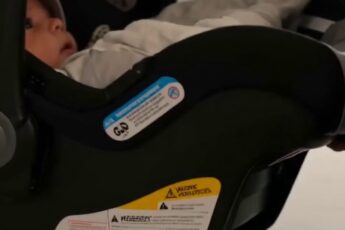
Our son, Noah, was only ten days old.
Ten days since I had come home with sore stitches, swollen eyes, and a body that felt borrowed from someone else. Ten days of feeding, rocking, bleeding, and trying to smile when visitors said, “You must be so happy.”
But that morning, something was wrong.
Not tired wrong.
Not new-mother wrong.
Wrong in a way that made the walls tilt.
“Mark,” I whispered. “Please. I need a doctor.”
He finally looked at me, but not with concern. With irritation.
“Women have babies every day, Emily. My mom was cooking dinner two days after having me.”
I swallowed hard. My fingers were numb around the crib rail.
“I can’t stand up.”
He gave a short laugh, cold and tired.
“You don’t want me to go. Just say that.”
The words hit harder than the pain.
I stared at him, at the man who had once held my hands in a hospital hallway and promised he would always protect me.
“I’m scared,” I said.
He picked up his overnight bag.
“I need one weekend where everything isn’t about you.”
Then he walked out.
The apartment went still after the door closed. Too still.
Noah made a tiny sound in his bassinet. I tried to reach for my phone on the rug, but my arm felt heavy, almost separate from me. The room smelled of baby lotion, laundry detergent, and the untouched cup of tea Mark had made for himself.
I moved one inch.
Then another.
Then my knees gave out.
I didn’t fall loudly. There was no crash, no cry, no dramatic moment. Just my cheek against the cold floor and the horrifying warmth spreading beneath me.
Noah began to cry.
At first, it was a soft little sound. Hungry. Confused. Needing his mother.
“I’m here,” I tried to tell him.
But nothing came out.
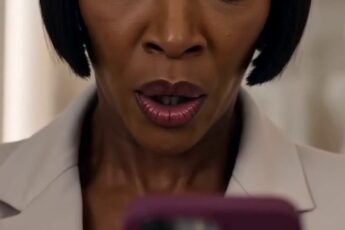
My phone lit up beside my hand.
For one second, I thought maybe Mark had changed his mind.
Instead, the screen showed a photo.
Mark, smiling beside a fireplace at some mountain lodge, holding a glass in the air.
Caption: Birthday escape. Finally breathing.
Finally breathing.
I was on the nursery floor, barely able to keep my eyes open, while my husband smiled like a man who had just been set free.
Noah cried louder.
I tried to move. I tried with everything left in me.
But the crib blurred. The ceiling faded. The tiny blue blanket over Noah’s legs became only a patch of color in the dark.
The last thing I heard was my newborn son crying for me.
And no one answering.
I woke up to a white ceiling and the smell of clean sheets.
For a moment, I didn’t know where I was.
My body felt far away, heavy and strange, as if it belonged to someone else. My throat was dry. My lips hurt. There was a soft ache deep inside me, and when I tried to move, a nurse gently placed her hand over mine.
“Easy, sweetheart,” she said. “You’re safe now.”
Safe.
That word nearly broke me.
My eyes filled before I even understood why.
“Noah,” I whispered.
The nurse smiled, and there was such kindness in her face that I started crying harder.
“He’s here. He’s perfectly all right.”
Then she turned toward the chair beside the window.
And there he was.
My tiny boy, wrapped in his blue blanket, sleeping against the chest of Mrs. Alvarez from apartment 4B.
Mrs. Alvarez was seventy-one, always smelled faintly of lavender soap, and had a habit of leaving little containers of soup outside my door since Noah was born. I had thanked her politely every time, but I never really understood why she kept coming by.
Now she sat there with my newborn in her arms, rocking him slowly, her gray hair pinned messily at the back of her head, her old cardigan buttoned unevenly.
When she saw I was awake, her mouth trembled.
“Oh, my dear girl,” she whispered.
I tried to speak, but only a sob came out.
She rose carefully and came closer with Noah.
“I heard him,” she said softly. “Through the wall. He cried and cried. Not like a hungry baby. Like a baby who knew something was wrong.”
My tears slipped into my hair.
“I tried,” I whispered. “I tried to get to him.”
“I know,” she said.
She leaned down and pressed her cheek against my forehead, the way a mother does when words are too small.
Then she told me the truth.
Two days after I came home from the hospital, when Mark had gone out to buy a cake and I had been too weak to answer the door, Mrs. Alvarez had noticed me through the half-open doorway. Pale. Shaking. Trying to carry laundry with one hand and Noah with the other.
That evening, she had knocked with chicken soup and said, “Give me a spare key, dear. Just for emergencies.”
I had laughed weakly and said I didn’t want to be dramatic.
She had looked at me for a long moment and answered, “Women are taught to apologize for needing help. I don’t believe in that.”
So I gave it to her.
And that small act, the one I barely remembered, saved my life.
She heard Noah crying that morning. She knocked. No answer. Knocked again. Then she used the key.
She found me on the nursery floor.
Found Noah red-faced and frightened in his bassinet.
Found the truth that Mark had walked away from.
The doctor came in later, a woman with tired eyes and a calm voice. She told me I had lost too much blood. She said another little while and the ending could have been different.
Different.
I turned my face toward the window and cried so hard my stitches hurt.
Not because I was afraid anymore.
Because I was still here.
Because Noah was still here.
Because an old woman on the other side of the wall had cared enough to listen.
By evening, Mark’s mother arrived.
Linda had always been polite to me, but distant. She was the kind of woman who folded napkins before sitting down, who noticed dust on a shelf, who believed family problems should stay behind closed doors.
But when she walked into that hospital room, she looked smaller than I had ever seen her.
Her coat was still on. Her face was pale. She carried a soft yellow blanket in her hands, the one she had knitted for Noah before he was born.
She looked at me.
Then at Noah.
Then at Mrs. Alvarez, who was sitting beside me like a guard at the gate.
“Emily,” Linda said, and her voice broke. “I didn’t know.”
I wanted to be angry with her.
Part of me was.
Because Mark had used her name like a weapon.
“My mom was cooking dinner two days after having me.”
As if my pain had been weakness.
As if motherhood was a contest women were supposed to survive silently.
Linda came to the side of my bed and took my hand.
“I never cooked dinner two days after having him,” she whispered. “I could barely walk.”
I stared at her.
Her eyes filled.
“He lied about that for years,” she said. “I let him turn me into an example I never was. I should have corrected him. I should have told him that a woman’s body is not something to mock after birth.”
Her fingers tightened around mine.
“I am so sorry.”
Those words opened something in me.
Not all of it. Not at once.
But enough for me to breathe.
A little later, Mark arrived.
He came in wearing the same jacket he had left in, his hair still neat, his face full of panic now that the world had turned and he was no longer the wronged husband escaping “drama.”
For the first time since I had known him, nobody rushed to make him comfortable.
Not his mother.
Not Mrs. Alvarez.
Not the nurse.
Not me.
He stood near the doorway and looked at Noah first, then at me.
“Emily,” he said. “I didn’t know it was serious.”
The room went still.
I looked at him for a long time.
This was the man I had begged.
The man who had heard me say I was scared.
The man who had walked out while I was sliding away from my own life.
My voice was weak, but it did not shake.
“I told you.”
He opened his mouth, but Linda turned on him with a look I had never seen from her before.
“No,” she said.
One word.
Quiet.
Firm.
It stopped him cold.
“You don’t get to explain over her,” Linda said. “You don’t get to make yourself the wounded one in this room.”
Mark’s face reddened.
“Mom—”
“She asked for help,” Linda said. “And you left.”
There was no shouting. No dramatic scene. No broken glass or slammed doors.
Just the truth, sitting in the middle of the room where everyone could finally see it.
Mark lowered his eyes.
For one second, I thought I wanted him to fall apart. I thought I wanted him to feel even a fraction of what I had felt on that nursery floor.
But then Noah stirred beside me.
His tiny mouth opened. His little fists moved under the blanket.
And suddenly I realized something.
I didn’t want my life to be built around Mark’s regret.
I wanted it to be built around my son’s peace.
So when Mark whispered, “Can I hold him?” I looked at Noah, then back at Mark.
“Not today,” I said.
He flinched.
But I didn’t.
Linda stayed that night.
She slept in the stiff chair with Noah’s blanket folded in her lap. Mrs. Alvarez went home only after making the nurse promise to tell me she would bring soup the moment I returned.
For the first time since Noah was born, I was not alone.
The days after that were slow.
Healing was not pretty.
It was messy hair, night sweats, sore muscles, tears over nothing, tears over everything. It was Linda washing tiny onesies in my kitchen sink and pretending not to notice when I cried into Noah’s burp cloth. It was Mrs. Alvarez bringing rice pudding in little glass bowls and sitting beside me while I fed the baby.
It was learning to say, “I need help,” without shame.
Mark asked to come home.
I said not yet.
He sent letters.
I read some. I left others unopened.
Some people expected me to forgive quickly because he was sorry.
But I learned something in that hospital bed.
Forgiveness is not pretending the wound didn’t happen.
Love is not leaving someone on the floor and returning only when others are watching.
And family is not always the person who wears the ring.
Sometimes family is the neighbor who hears a baby cry through the wall.
Sometimes it is a mother-in-law who finally tells the truth.
Sometimes it is the tiny boy sleeping against your chest, reminding you that you still have a reason to rise.
Three months later, I stood in Noah’s nursery again.
The same room.
The same crib.
But everything felt different.
Morning sunlight spilled across the rug in soft golden squares. A basket of folded baby clothes sat near the rocking chair. On the windowsill, Mrs. Alvarez had placed a small pot of white flowers, “for new beginnings,” she said.
Noah was in my arms, warm and heavy, his cheek pressed against my shoulder.
Linda was in the kitchen humming while she stirred soup.
Mrs. Alvarez was by the window, pretending she had only stopped by for five minutes, though we all knew she would stay until lunch.
And me?
I stood there barefoot on the nursery floor where I had once believed no one would come.
But someone had.
Someone heard.
Someone opened the door.
I kissed Noah’s soft hair and whispered, “You and I made it, little love.”
He stretched one tiny hand against my chest, as if answering me.
Outside, the world moved on like it always does.
But inside that room, beneath the warm light, with clean blankets stacked in the corner and the smell of soup drifting down the hallway, I finally understood:
I had not disappeared.
I had been seen.
And from that day on, my son would grow up knowing that love is not a promise spoken in easy moments.
Love is staying.
Love is noticing.
Love is opening the door when someone is too weak to reach it.
Ladies, has there ever been a moment in your life when help came from the person you least expected? Did this story touch you, anger you, or remind you of someone? Share your thoughts in the comments — I would truly love to read your stories.